Hunting Myths Busted: What Every Hunter Should Know


Mateo Lorenzo
today at 7:41 PM
As a lifelong hunter, I take for granted the generational knowledge I have amassed over the years. It’s only when I have the pleasure of talking with a new sportsman that I realize there is a lot of misinformation out there about hunting. Today, we will be debunking some of the myths surrounding hunting and, hopefully, opening minds and doors to get more hunters in the field.
New to hunting and sorting fact from fiction? Start a free trial on Infinite Outdoors and see how modern hunters find and book private land across the country. Get started at infiniteoutdoorsusa.com/signup.
Why Hunting Myths Stick Around
Hunting is one of the most misunderstood activities in America, and a lot of the misunderstanding comes from people who've never done it. The myths get repeated until they feel true — hunting is cruel, hunting is reckless, hunting is just rich guys with expensive toys. None of it holds up when given an honest look.
Clearing up the most common myths isn't about winning arguments. It's about understanding what hunting actually is: a regulated, conservation-funding tradition that most people have more in common with than they realize. Here are the four that need busting most.
Myth 1: Hunting Is Just About Killing
This is the big one, and it's the furthest from the truth. For most hunters, the kill is a small fraction of the experience — the hours of scouting, the early mornings, the knowledge of the animal and the country, and the respect for a clean, ethical harvest.
Ethical Hunting and Fair Chase
Ethical hunting is built on the principle of fair chase — giving the animal a genuine chance and taking only shots you can make cleanly. Serious hunters obsess over shot placement, practice year-round, and pass on marginal opportunities in the name of being ethical and honoring the animal. The goal is a quick, humane harvest, not a body count.
Hunters Fund American Conservation
Here's the fact that stops most critics cold: hunters pay for the majority of wildlife conservation in the United States, and it’s not particularly close. Through the Pittman-Robertson Act — a federal excise tax on firearms and ammunition that hunters have supported since 1937 — plus license and tag fees, hunters fund habitat restoration, wildlife research, and public land management.
In 2026, nearly $1.3 billion was distributed to state wildlife agencies through these programs, according to the NSSF and U.S. Fish and Wildlife Service. That money protects habitat for hunted and non-hunted species alike. The hunter who buys a tag is funding the songbird's habitat, too. (Confirm figure — see editor notes.)
That conservation ethic runs through everything IO does — every property on the platform is biologist-certified and managed for healthy, sustainable game populations. For more on how hunters and landowners keep working lands intact, see our Recreation That Pays It Forward: WLA Partnership.
Myth 2: You Don't Need Any Gear.. or You Need ALL the Gear
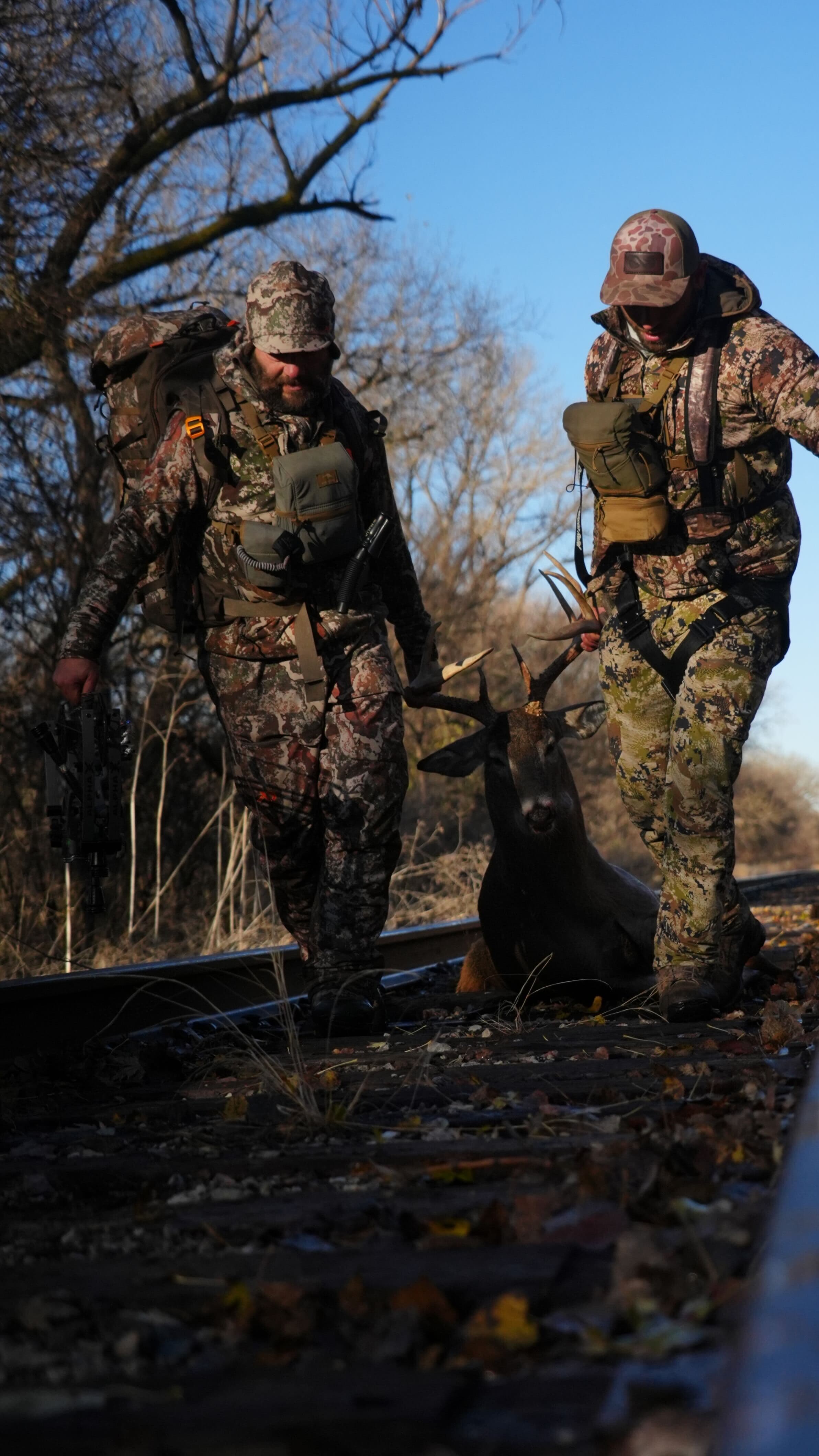
Old timers may say you need no gear to get in the field. However, the opposite myth is just as common: that hunting requires a truckload of expensive equipment before you can start. The truth sits in the middle.
What Beginners Actually Need
You need less than the catalogs suggest, but more than nothing. A legal weapon you've practiced with, appropriate clothing for the weather, boots that can cover ground, a way to field dress and pack out an animal, and a method to navigate are the real essentials. Everything else is refinement. See our Elk Hunting Gear Essentials Blog.
The mistake most new hunters make isn't owning too little — it's buying too much, too soon, before they know what their style of hunting actually demands. Start with the basics, hunt a season, and let real gaps tell you what to buy next.
The Role of Guides and Outfitters
For some hunts — a backcountry elk trip, a first out-of-state hunt, dangerous game — a guide or outfitter earns every dollar. They provide local knowledge, access, and logistics that would take years to build on your own. But a guide isn't required to hunt. Plenty of the best hunting is also accessible DIY, especially once you solve the access problem, which is where technology comes in.
Technology isn't a gimmick — it's how hunters find ground now. Infinite Outdoors connects hunters with private properties across the US, mapped and bookable from your phone. Browse properties at infiniteoutdoorsusa.com.
Myth 3: Technology Has No Place in Hunting
Some traditionalists argue that technology cheapens hunting. In reality, technology has been part of hunting for as long as hunters have made better bows, optics, and maps. The modern version is just digital — and it's become standard practice.
How Hunting Apps Changed the Game
Mapping apps show property boundaries, public and private land lines, topography, and wind in real time. GPS keeps you found in country where getting lost used to be a real risk. Weather tools help you time the rut and the movement. And booking platforms have solved the single hardest problem in hunting: finding legal access to good ground.
This is where Infinite Outdoors fits. Infinite Outdoors is a hunting app that connects hunters with private land across the country — browse properties, see boundaries, and book access from your phone, without knocking on a single door. For a breakdown of the tools worth having, see our "Best Apps for Booking Private Land Hunting".
Technology Doesn't Replace Skill
The key distinction: good technology removes friction, it doesn't remove woodsmanship. An app can show you the property line, but it can't read the sign, make the stalk, play the wind, or place the shot. The best hunters use technology to spend more time hunting and less time on logistics — not to shortcut the skills that matter.
Myth 4: Hunting Is Dangerous
The image of hunting as reckless and accident-prone is one of the most persistent myths — and the statistics flatly contradict it.
Hunting Is Safer Than You Think
According to the National Shooting Sports Foundation, hunting is one of the safest recreational activities in America — statistically safer than golf, tennis, and bowling when measured by injury rate per participant. Firearm hunting incidents are rare, and they've declined for decades as hunter education has become near-universal. (Confirm framing — see editor notes.)
Why Hunting Stays Safe
Hunting's safety record isn't luck. It's the product of:
- Mandatory hunter education. Most states and game require a hunter safety course covering firearm handling, ethics, and field safety before you can buy a license.
- Blaze orange requirements. During firearm seasons, hunter orange keeps hunters visible to each other.
- A strong safety culture. Muzzle control, target identification, and treating every firearm as loaded are drilled into hunters from day one.
The real risks in hunting are the same as any backcountry activity — weather, terrain, dehydration, and getting lost — not the firearm. Preparation handles all of them.
Basic Safety Still Matters
None of this means you can be careless. Tell someone your plan, carry a first-aid kit and navigation, dress for conditions, know your limits on steep or remote terrain, and never let a long day erode your firearm discipline. Safe hunters aren't lucky — they're deliberate.
So What Should You Actually Take Away?
The honest picture of hunting looks nothing like the myths:
- It's a conservation engine, not a body count — hunters fund the majority of American wildlife management.
- It's accessible, not gear-gated — you need the basics, not the whole catalog.
- It's modernized, not purist — technology is standard, and it solves real problems like access.
- It's safe, not reckless — statistically safer than most common sports.
If you're new and sorting through the noise, the best thing you can do is go — with a mentor, a hunter ed course, and a plan. And if the piece you're missing is access to good ground, that's the one myth worth busting for good: you don't need to own land or know a landowner to hunt quality private country anymore.
The biggest myth of all? That good hunting ground is impossible to find. Infinite Outdoors gives hunters access to private, biologist-certified properties across the country — low pressure, clearly mapped, booked in minutes and at a price point a fraction of an outfitted hunt. Create your account and start exploring at infiniteoutdoorsusa.com.
Frequently Asked Questions
Is hunting just about killing animals? No. For most hunters, the harvest is a small part of the experience. Hunting centers on scouting, woodsmanship, conservation, and ethical fair chase — and hunters fund the majority of U.S. wildlife conservation.
Do hunters really fund conservation? Yes. Through the Pittman-Robertson excise tax and license fees, hunters fund the bulk of American wildlife management. In 2026, nearly $1.3 billion went to state wildlife agencies through these programs.
Do you need expensive gear to start hunting? No. You need a weapon you've practiced with, weather-appropriate clothing, boots, a way to field dress and pack out game, and navigation. Avoid over-buying before you know your style of hunting.
Is technology considered cheating in hunting? No. Mapping apps, GPS, and booking platforms are standard tools that remove friction and solve access problems. They don't replace woodsmanship — an app can't make the stalk or place the shot.
Is hunting dangerous? Statistically, no. The National Shooting Sports Foundation reports hunting is safer than golf and most common sports by injury rate. Mandatory hunter education and a strong safety culture keep incident rates low.