Goose Hunting Essentials for the Late Season

Justin Hunold
last Monday at 8:35 PM
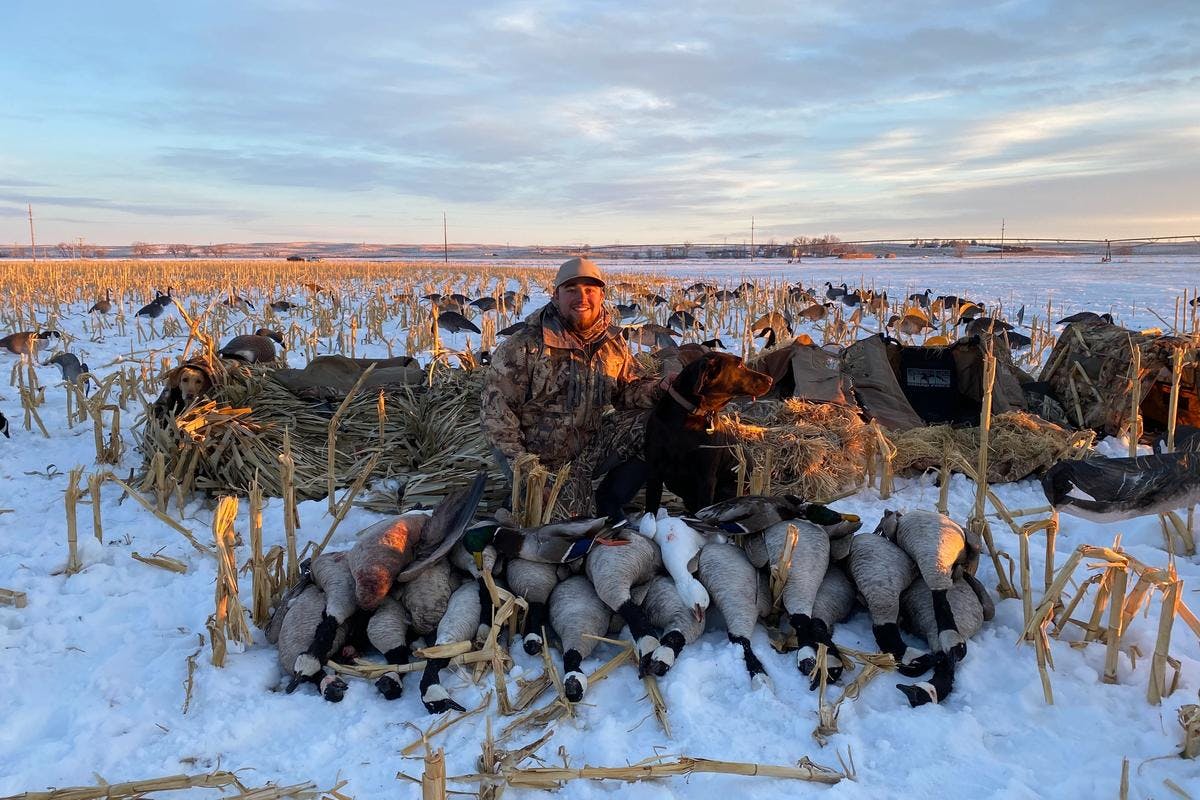
Late-season goose hunting is all about timing, gear, and grit. The same thinking often carries over to duck season too. If you are hunting for geese late in the year, this is the time to be in a blind and chasing dark geese for the last weeks of the 2023-2024 waterfowl season. Do not forget Snow Geese and spring turkey hunting just yet. There are still honkers to be had, and goose hunting can be at its best late in the season.
When you move into cut fields, backwater creeks, and open-water safe spots, it is very important to have the right gear, the right plan, and the right mindset. Late-season limits can be harder to find in some places, but the chance at great hunts and a few more goose breasts in the freezer makes the work worth it.
Let's look at the key gear: the best waterfowl gun, steel shot, and blinds. Then we will cover scouting, calling, decoy placement, and the mental side of late-season hunting for geese.
Equipment and Gear
Choosing the right gear is key to successful goose hunting. Hunters need a reliable gun and ammo, good decoys, and clothing that fits the weather.
Waterfowl Shotgun
The Best Waterfowl Shotgun
We recently looked at the best turkey gun and how shotguns have become job-specific tools. That is also true for the best waterfowl gun. In the end, any solid 12 or 20-gauge shotgun will work in the goose blind. When winter wind is blowing, a good semi-auto shotgun with the right barrel length, swap chokes, and a tough finish will serve you better than a fancy over-under or a short-barrel turkey gun.
If you are a smaller-stature shooter, or you are taking one along, that person should use a gun that is just as reliable and made for the job. In many cases, it may be smart to hand them the upgrade first. New hunters need good gear if they are going to stay with it.
The Weatherby SA-08 Compact fits that role. It is tough, reliable, light kicking, and compact. It can help a smaller hunter become a more effective hunter. With a Dual Valve operating system, the gun will run any 2.75 to 3 inch 20 gauge load you need. For comfort and handling with smaller-framed folks, the SA-08 has a 12.5 inch length of pull and a 24 inch barrel. It is a strong choice for a layout blind, and the price is just $679 MSRP.
Weatherby 18i and Weatherby Element Waterfowl
SA-08 SYNTHETIC COMPACT

Weatherby 18i and Weatherby Element Waterfowl
When it comes to some of the most reliable shotguns in the world, many hunters look to an inertia operating system. For the best waterfowl gun, you also want something durable and, ideally, camo or at least a matte finish. Weatherby shotguns fit that need. Both the Weatherby 18i and Weatherby Element are set up for the goose blind. Either gun will handle 3 inch shells, and the 18i also offers 3.5 inch magnum steel shot loads.
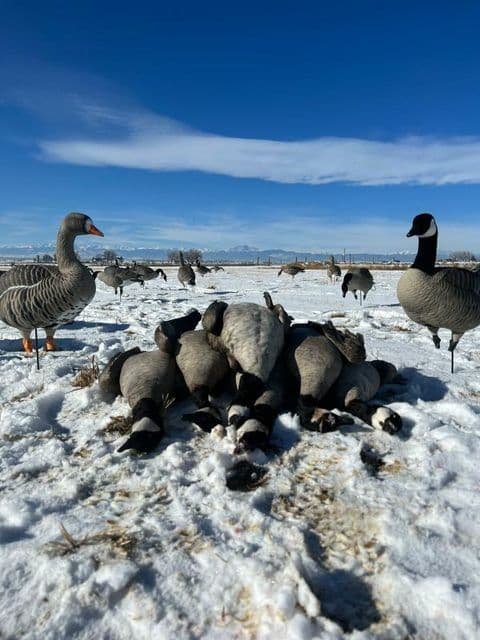
If you are choosing a waterfowl shotgun, either model can do the job. The choice comes down to price and features. The Weatherby 18i Waterfowl can handle 2.75 to 3.5 inch 12 gauge shells, depending on the model. If you are part of the growing number of hunters moving away from 3.5 inch shells and toward 3 inch or even 2.75 inch 12 gauge loads, either the 18i or Element should work well.
12 gauge vs 20 gauge
he granddaddy of all shotguns is the 12 gauge. It has huge flexibility, and if you were only going to own one gun for everything, the 12 gauge is it. It can do almost anything. Still, more and more waterfowl hunters are moving to 20 gauge, and those hunters are taking Snow Geese and Dark Geese with the same success as hunters carrying big 12s.
With modern shells and heavier-than-lead projectiles, a 20 gauge can hit like a hammer. Most goose would not know it was not a 12 gauge. And as the market grows, so do the ammo choices, which makes a 20 almost as flexible as a 12.
That said, the extra shot count matters when the hunting gets heavy. Snow Geese and Dark Geese often mean lots of shooting and high limits. A 20 gauge steel shot load just does not match a larger gun. If you need 20 gauge steel shot for Snow Geese or Dark Geese, look for a 3 inch load in #2 through BB sizes.
You will most likely shoot geese over a food source or small open water, so a decoying setup is common. If you are using 20 gauge steel shot, go with a slower, heavier load rather than a fast, light one. More pellets matter more than speed when the birds are cupped up and landing.
In the 12 gauge vs. 20 gauge debate for big winter geese and high-volume shooting, it is often better to use a light-recoiling 2.75 inch 12 gauge load with more steel shot than a 20 gauge steel shot load in a 3-inch hull.
The real reason to use steel shot in 12 gauge is volume. When you chase double-digit limits, you will shoot a lot. Between locked-up birds and high-volume shooting, the less expensive steel shot can be a smart choice when chasing Snow Geese and their darker cousins.
Layout and Multiple Man Blinds
Alps Outdoorz Alpha Waterfowl Blind and Alps Outdoorz Legend Layout Blind are great ways to get close to geese feeding in a field or on a backwater creek when the season is late and the wind is cold.
A layout blind brushed in with grass, plants, mud, or snow can be one of the best ways to kill geese in fields or on shore near open water. Staying low keeps you warmer and harder to see. The Legend Layout Blind is a strong choice for a comfortable winter hunt and can put you on the X for late-season geese.
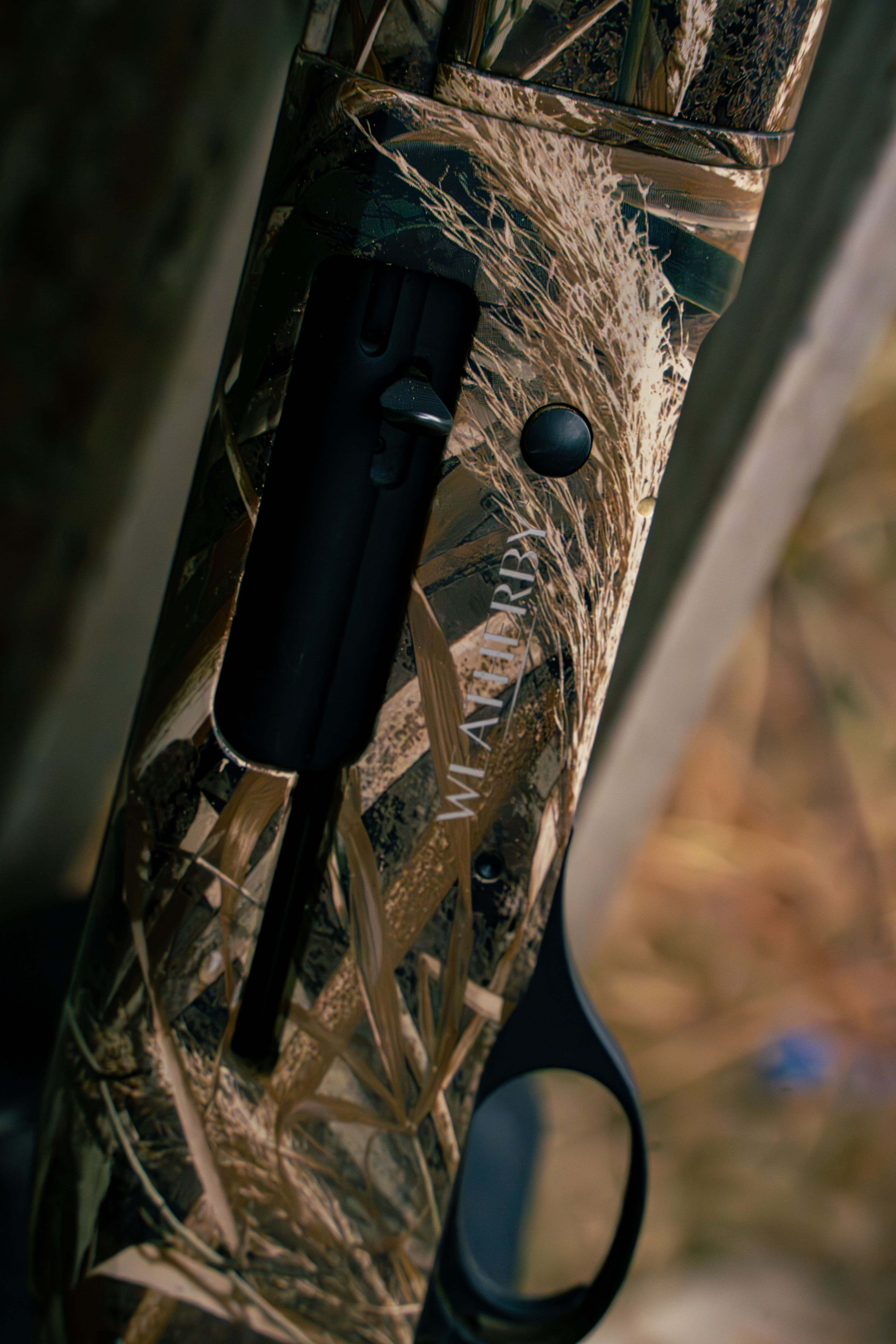
For a few hunters sitting on the water edge, or even in a quiet field, the Alpha Waterfowl Blind is a great option. Putting several people in one hidden blind can be easier than running multiple layout blinds among the decoys. These blinds work well on water-edge hunts, where nearby cover may be too tall for shooting from a layout blind.
Bottom line: you need a blind to get within range of late-season birds. A layout blind works well in many situations, while a multi-person blind can be best when you have enough cover to brush it into a hedgerow or shoreline brush.
Hunting Techniques
Good goose hunting calls for smart scouting, calling, and decoy work. If you use those tools well, your odds go up.
Scouting for Geese
Scouting is key for finding geese and reading their patterns. Watch fields at dawn and dusk to see where geese feed and rest. If private land is part of the plan, getting landowner permission is critical. That is where Infinite Outdoors comes in. You will have unpressured access to some of the best waterfowl hunting in the country.
Calling Strategies
Good calling can pull geese in and get them to land in range. Use a mix of calls, such as greeting calls, hail calls, and clucks, to match the birds' natural sounds. Watch how the geese act and change your calling based on their response.
Effective Calls:
- Greeting Call: A moderate series of notes signaling safety
- Hail Call: Loud, long calls to capture attention at a distance
- Cluck: Short, quick notes to coax geese closer
Check out some of our partners for the next goose call in your arsenal
Decoy Placement
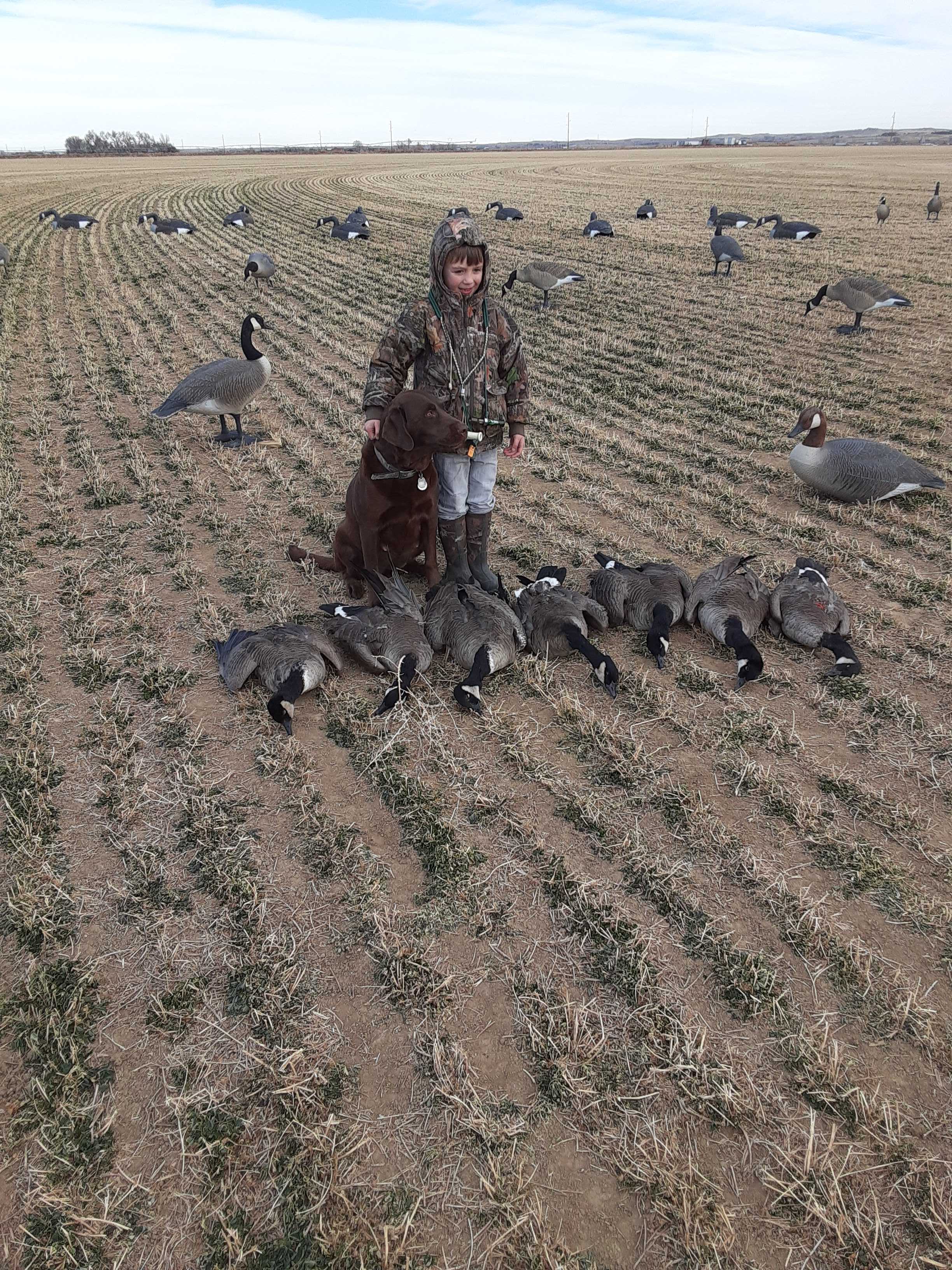
Decoys play a key role in bringing geese into range. Spread them in a way that looks natural and leaves room for landing. Sometimes fewer decoys in a smart layout work better than huge spreads, depending on the hunting area and goose behavior.
I like hunting from a layout in the middle of the spread. Also, if you mix shells, full-body decoys, and silhouettes, the spread can look more alive as the birds circle. Those 2D silhouettes can add motion by appearing and disappearing as the birds move around and through the air.
When hunting open water, place some decoys on the ice around it, some in the water, and maybe a few full-body decoys where the ice meets shore. Sit as close as the cover allows, but remember that you need the wind in the birds' faces to get them to land. Adjust the spread as needed.
Decoy Tips:
- Space Decoys: Allow for realistic landing areas
- Vary Positions: Mix feeders, standers, and resters for a natural look
- Adjust to Conditions: Change spread size and pattern based on weather and location
Late Season Mentality
Just like all waterfowl hunting late season can be an exercise in discomfort. How good are you at being uncomfortable but on point? Late-season goose hunting can test every bit of that. It will be cold. You will likely be wet. To get the birds you have to put in the work, early mornings, lots of scouting, cold, snow, wind, long setups, and long hikes with heavy clothes, decoys, and blinds. It’s a grind.
From there, the limits tend to be a bit smaller than earlier in the year, but man, the winter birds are just fun in type two fun way. And they may be the only chance you get at hunting that species for the entire year. Late-season waterfowl is the stuff that makes me look in the mirror and take stock of the hunter I am, the type of hunter I want to be, and the type of person I am in general. None of which allows for the easy road.
If you’ve made it this far, I’d imagine you’re of the same ilk. If that’s the case, then you’ve come to the right place. We here at Infinite Outdoors are made for hunters and people like you. Hard chargers, do-it-yourself sorts. We are happy to have you.
Final Shot
Whether we are snow goose hunting or hunting Canada geese, a few things always matter. Bring a lot of shells and a good gun. Decoy movement matters, but being in the right spot matters more. Scouting is key, but seeing birds where you cannot reach them does not help much.
But gear will not get you to the finish line on its own. You also need a winning attitude and some access to line up. Add a little luck, and you may find yourself in the right place at the right time, with a chance to bring home some of the biggest, toughest, and most rewarding geese of the season.
Shoot straight, be safe, and good luck.
Q&A
Question: Why can late-season goose hunting be especially productive even though limits may be tougher to get?
Short answer: Late-season goose hunting can be at its best because birds are grouped around reliable food sources, backwater creeks, and open-water safe spots. The hunts may be colder, wetter, and harder, but the reward can be great chances at mature winter geese and some of the best hunts of the season.
Question: Is a 12 gauge or 20 gauge better for late-season geese?
Short answer: Both can work, but this article leans toward the 12 gauge for high-volume late-season goose hunting, especially with steel shot. A 20 gauge can be effective with modern loads, especially heavier-than-lead options, but a 12 gauge usually gives you more payload, better steel-shot performance, and lower-cost shooting when chasing Snow Geese and Dark Geese in larger numbers.
Question: When should a hunter use a layout blind versus a multi-person blind?
Short answer: A layout blind is best when you need to get low and hidden in fields, along shorelines, or in the middle of a decoy spread. A multi-person blind is most useful when hunting with several people near water edges, hedgerows, or places with taller cover where layout blinds may not give clean shots or enough concealment.
Question: What matters most when setting decoys for late-season geese?
Short answer: Decoys should look natural and leave real landing space. Mixing shells, full-body decoys, and silhouettes can add visual movement, while changing spread size and shape for the weather, location, and bird behavior is key. The article also says that being in the right spot matters more than decoy movement alone.
Question: What mindset is needed for successful late-season goose hunting?
Short answer: Late-season goose hunting takes a willingness to be uncomfortable and stay focused. Hunters should expect cold, wet conditions, early mornings, long setups, heavy gear, scouting, wind, and snow. Gear helps, but persistence, access, preparation, and a strong attitude are what bring the hunt together.