Average Elk Weight: How Much Do Bull and Cow Elk Really Weigh?


Mateo Lorenzo
today at 8:22 PM
A mature bull elk averages around 700 pounds and a cow elk about 500 pounds, according to the Rocky Mountain Elk Foundation. Size varies by subspecies: Roosevelt elk are the heaviest at roughly 900 pounds for a bull, while Tule elk are the smallest at about 400 pounds.
We have all heard the campfire stories of someone shooting a 1,000 lb elk and to be quite frank I used to think that was possible. It wasn’t until spending some time in New Mexico that put all of those stories to rest after putting an full 386” bull on the scale and seeing it come in at just under 800 lbs. Don’t get me wrong, elk are giant animals and when they step into your site or scope they look even bigger, however we are here to set the record straight on the actual size of a wild bull or cow elk so that you can be the guy that corrects your friends around the campfire next time.
Chasing a big bull this fall or planning next year's hunt? Start a free trial on Infinite Outdoors and browse private elk properties across Colorado, Wyoming, Montana, and Utah. Get started at infiniteoutdoorsusa.com/signup.
How Much Does an Elk Weigh?
The average elk weight depends on sex, age, subspecies, and the country the animal lives in. But the Rocky Mountain Elk Foundation (RMEF) gives a clean baseline for the most common North American elk:
- Bull (male) elk: about 700 pounds
- Cow (female) elk: about 500 pounds
- Newborn calf: about 35 pounds
Those are averages, not ceilings. A heavy, mature bull in good country can push well past 700 pounds, and the largest subspecies tops out considerably higher. A cow typically runs two-thirds to three-quarters the weight of a mature bull.
For a hunter, the bull-vs-cow weight gap matters for real reasons: meat yield, pack-out planning, and judging an animal in the field. A 700-pound bull is a very different pack-out than a 500-pound cow.
Average Weight of Bull Elk vs. Cow Elk
The difference between bull and cow elk weight comes down to the same thing it does in most antlered species: bulls grow bigger bodies to compete during the rut.
A mature bull carries more muscle mass through the neck, shoulders, and hindquarters, and that's before you count the antlers. Cows put their energy into reproduction rather than body mass, so they stay lighter and leaner. A yearling bull, or "spike" hasn't filled out yet and weighs far less than a mature herd bull.
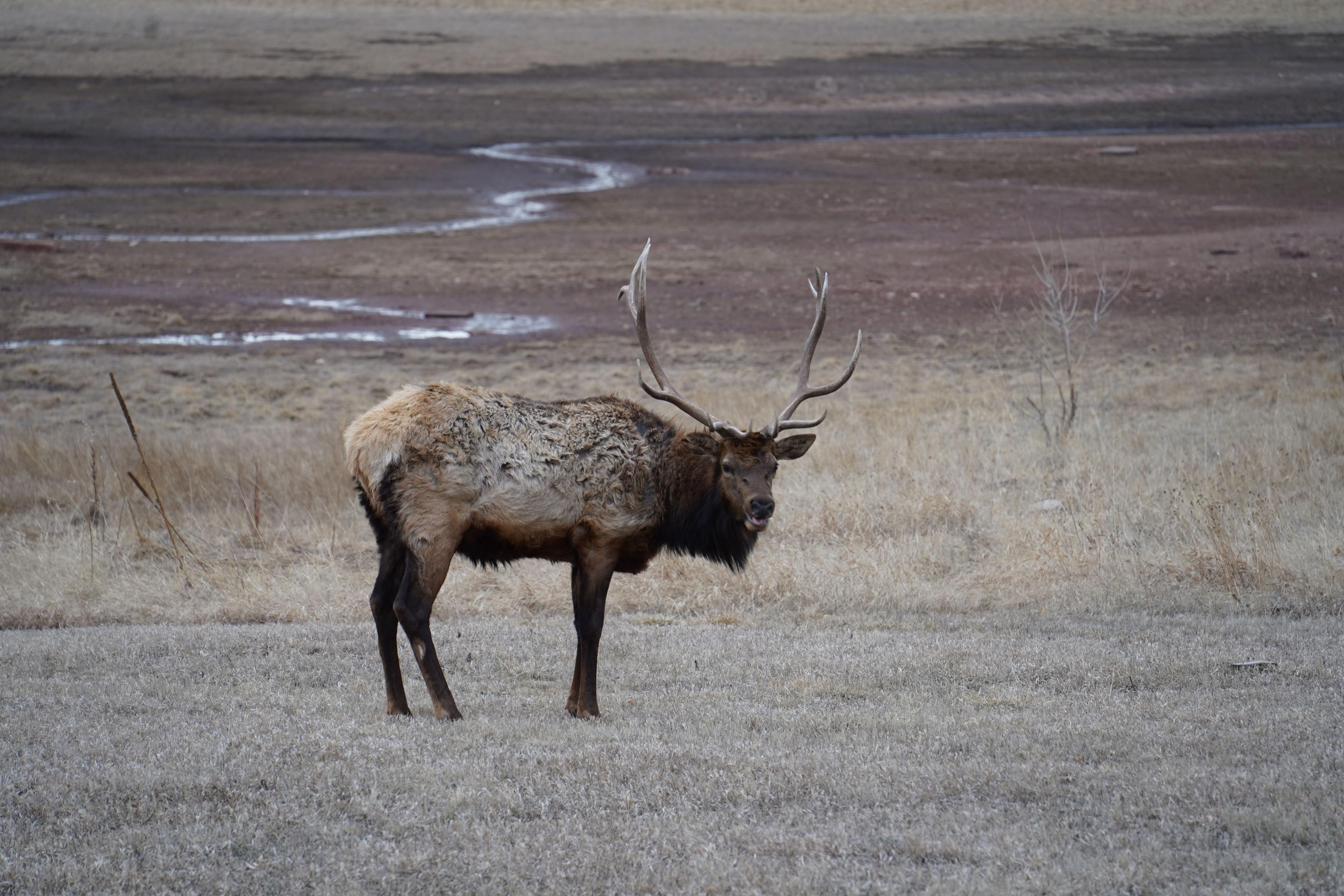
Elk Weight by Subspecies
North American elk aren't one uniform animal. The subspecies vary enough in body size that a "typical" elk weight shifts depending on which one you're looking at. Per RMEF figures:
Roosevelt Elk
The largest-bodied elk in North America. Found in the Pacific Northwest's coastal rainforests, Roosevelt elk bulls average around 900 pounds, with cows around 600 pounds. They carry the most body mass of any subspecies, but notably, not the largest antlers.
Rocky Mountain Elk
The most widespread and the one most Western hunters picture. Rocky Mountain elk sit near the classic ~700-pound bull average. They don't match Roosevelt elk in body size, but they grow the largest antlers of any subspecies, which is why they dominate the record books. If you're comparing Roosevelt elk vs. Rocky Mountain elk, it's a trade-off: bigger body versus bigger rack.
Tule Elk
The smallest subspecies, native to California's grasslands. Tule elk bulls average about 400 pounds and cows about 300 pounds, roughly half the body weight of a Roosevelt bull.
What Makes Elk Size Vary by Region?
Two elk of the same subspecies can still differ in weight depending on where they live. A few factors drive it:
- Nutrition. Elk in rich, low-pressure country with strong year-round forage grow heavier than elk scraping by on marginal range. Think harsh winters & longer migration routes often lead to lower quality forage and therefore smaller body size. Where as milder winters and less elevation travelled during migration can lead to better year round forage and bigger body (and sometimes bigger rack).
- Genetics. Body size is partly inherited, and certain herds consistently produce bigger animals.
- Age structure. Herds where bulls survive to full maturity simply hold bigger animals. Heavily pressured populations where bulls rarely reach 5+ years old show lower average weights.
- Climate and habitat. Coastal rainforest (Roosevelt country) often grows bigger-bodied elk than high-desert or arid grassland, however if the forage is there, elk can still reach that 700+ lb range.
That last point about age structure is why private, well-managed ground so often holds bigger-bodied animals, bulls get the years they need to fill out. If you're trying to understand where the biggest elk live, our Targeting Cow elk for a DIY hunt breaks down the top elk states in detail.
Knowing what a bull weighs is one thing, finding one is another. Infinite Outdoors lists private elk properties across the West where pressure is low and bulls get the years to grow big. Browse elk country at infiniteoutdoorsusa.com.
Elk Size and Dimensions
Weight is only part of the picture. Elk are genuinely large animals, and their dimensions explain why.
How Tall Are Elk?
An average bull elk stands about 5 feet (1.5 m) at the shoulder and measures roughly 8 feet from nose to tail. A cow is a bit smaller at about 4.5 feet at the shoulder and 6.5 feet nose to tail. Add the head and antlers, and a mature bull with his head up can tower over 8 feet tall, which is why they look so much bigger than deer in person.
How Much Do Elk Antlers Weigh?
Only bull elk grow antlers (more on that below). A mature bull's full set can weigh up to 40 pounds, and he grows and sheds that entire rack every single year. The antlers are bone, not horn, and the annual regrowth is one of the fastest growth rates of any mammal tissue.
Elk Size Compared to Other Wildlife
To put it in perspective: a mature bull elk weighs roughly three to four times what a mature whitetail buck weighs, and stands noticeably taller at the shoulder. Among North American deer, only moose are substantially larger. An elk is a lot of animal, and a lot of meat on the ground when one's down.
Quick Elk Facts
A rundown of the common questions that come with elk size:
- What are male elk called? Bulls. Females are cows, babies are calves, and a yearling bull is a "spike."
- Do female elk have antlers? No. Only bulls grow antlers. (And they're antlers, not horns — antlers are shed and regrown yearly; horns are permanent.)
- What do elk eat? Elk are grazers with a four-chambered stomach. They eat grasses and forbs in summer, grasses in spring and fall, and shift to shrubs, bark, and twigs in winter. They also use mineral licks.
- How fast do elk run? Elk can run roughly 40 mph and are strong swimmers — fast enough that a spooked herd disappears quickly in open country.
- What's the scientific name for elk? Cervus canadensis. (Historically classified as Cervus elaphus, the same grouping as the European red deer; RMEF still uses elaphus.)

Why Elk Weight Matters to Hunters
This isn't just trivia. Elk size shapes how you plan and execute a hunt:
- Meat yield and pack-out. A 700-pound bull yields a lot of boned-out meat — often 200+ pounds — and if you're miles from the truck, that's multiple trips. Knowing the animal's size before you pull the trigger means knowing what you're signing up for. Our "Elk Hunting Gear Essentials" covers the pack and gear to handle it.
- Shot placement. A bigger-bodied animal has a larger vital zone but also more mass to drive a bullet or broadhead through — part of why cartridge and bullet choice matters for elk.
- Judging animals. Understanding average body size helps you field-judge whether a bull is mature or still young, which matters on both trophy and management hunts.
So What Should You Actually Take Away?
The short version: a bull elk averages about 700 pounds, a cow about 500, and the subspecies you're hunting shifts that baseline — Roosevelt elk biggest in the body, Tule smallest, Rocky Mountain elk biggest in the antlers. Region, age, and nutrition move the number from there.
For hunters, the practical takeaway is that the biggest-bodied, oldest bulls tend to live where pressure is lowest and animals get the years to grow. That's exactly the kind of ground Infinite Outdoors specializes in — low-pressure private country across the elk-rich West where bulls reach full size.
A mature bull is 700 pounds of reason to find the right ground. Infinite Outdoors connects elk hunters with 450+ biologist-certified private properties across Colorado, Wyoming, Montana, and Nebraska — low pressure, mature animals, clearly mapped. Create your account and start exploring at infiniteoutdoorsusa.com.
Frequently Asked Questions
What is the average elk weight? A mature bull elk averages about 700 pounds and a cow about 500 pounds, per the Rocky Mountain Elk Foundation. Subspecies vary: Roosevelt elk bulls reach ~900 pounds, Tule elk bulls ~400 pounds.
How much does a bull elk weigh? A mature Rocky Mountain bull averages around 700 pounds. The largest subspecies, the Roosevelt elk, averages closer to 900 pounds for a bull.
How much does a cow elk weigh? A cow elk averages about 500 pounds — roughly two-thirds to three-quarters the weight of a mature bull of the same subspecies.
Which elk subspecies is the biggest? Roosevelt elk are the largest in body size, with bulls around 900 pounds. Rocky Mountain elk grow the largest antlers, and Tule elk are the smallest overall.
Do female elk have antlers? No. Only bull elk grow antlers, which they shed and regrow every year. Female elk (cows) never grow antlers or horns.
How tall is an elk? A bull elk stands about 5 feet at the shoulder and 8 feet from nose to tail. With his head and antlers raised, a mature bull can stand well over 8 feet tall.