How to Fish Low Water Situations: Tips & Best Practices


Wesley Littlefield
04/08/2026
In low water, target oxygenated spots — riffles, eddies, and deep pools — downsize your line and flies, and move slowly to avoid spooking fish. Trout stack in predictable locations when levels drop, making them easier to find if you know what to look for.
Want to fish water where trout haven’t been spooked all day? Infinite Outdoors connects anglers with private rivers, streams, and ponds across the West — less pressure, better fish behavior, and more consistent action even in tough conditions. Browse fishing properties → infiniteoutdoorsusa.com
Don’t cancel your fishing trip when you learn of low water levels. Part of the allure that keeps fishing new and exciting is deciphering where the fish are and what they want, depending on the time of year, recent weather patterns, and a myriad of other variables. However, low water is one situation that stumps many anglers. Low water is challenging because fish often become lethargic, will easily spot you, and are reluctant to bite. If you’re experiencing low water in the area, don’t fret — you can use the following tips and best practices to make the most out of your next fishing trip.
Low Water Trout Fishing Tips & Best Practices
After decades of fishing, I’ve learned many lessons the hard way, but my favorite way to learn is by what you’re doing now — learning from another angler. It shortens the learning curve and gives you great advice along the way. I picked up many of these tips while fishing during droughts and from other experienced anglers.
Try Access+ for 7 days: private-land hunting and fishing across the West. Start the trial →
Fish Oxygen-Rich Spots
Just like us, fish need oxygen, and in low-water situations, oxygen levels tend to drop significantly as water temperatures rise. The fish either move to a more oxygenated spot or risk dying. Two such places with higher oxygen content are ripples (small rapids) and fast-flowing water, also called broken water. Moving water is generally more oxygenated, especially when bubbles are present. This is one reason why trout are commonly found in riffles, eddies, and tailouts.
If you’re only able to fish calm water, the next-best option is a deeper hole. A deeper hole — sometimes only 2–3 feet deep — not only gives fish more room to swim and evade predators, but it also has a higher dissolved oxygen concentration because the water is generally cooler. Colder water holds more oxygen, which is why deeper pools are excellent places to catch trout when the water is low.
Cover & Structure Are Your Friend
To escape the sight of predators, trout hide under cover — undercut banks, overhanging trees, and brush. Since there are fewer places to hide when the water is low, you’re likely to find more fish resting under cover. Predatory fish like trout also use structure such as rocks, brush/logs, river bends, and changes in depth to ambush prey.
During a recent low-water trip, I was amazed at how many trout were hiding next to a single log — constant rises in a 10x30-yard stretch because it offered both cover and structure. Concentrate your casts around anything that breaks the flow or provides shade.
Downsize Your Lines and Flies
Downsizing is one of the most effective strategies for low-water fishing. With less water to hide your line, a lighter tippet makes it harder for fish to spot it. Smaller flies match the reduced forage and get more bites. When fly fishing, consider extending to a 9–12-foot leader with size 18 and smaller flies. Don’t be afraid to go smaller than feels comfortable — low water usually demands it.
Become a Trout Fishing Ninja
Stealth is everything in low water. Trout spook easily, whether you’re wading or walking the bank. You’ll often need to make longer casts than normal and position yourself farther from the fish. Move slowly — much more slowly than usual. Take smaller steps; it might take five minutes to cover ground you’d normally cross in 30 seconds.
Casting upstream and making fewer false casts also helps. Your shadow moves less, the line hits the water more quietly, and fewer fish will react to you as a predator overhead. You’ll still spook some fish, but these habits dramatically reduce the number.
Don’t Be Afraid to Make Multiple Casts
Some anglers make one cast to a spot, don’t get a bite, and move on. Instead, make multiple casts — in and around the same target. There have been many times I’ve had fish bite on the third or fourth cast because I finally enticed (or annoyed) them enough. Rotating through a few fly patterns is also worth the extra knot-tying. And when all else fails, have the humility to use natural bait where it’s legal.
The biggest mistake anglers make in low water? Fishing pressured public water where fish have been spooked all day. Infinite Outdoors connects you with private rivers, streams, and ponds where fish hold in natural patterns — undisturbed structure, clean oxygen, and no crowds. Explore private fishing access → infiniteoutdoorsusa.com
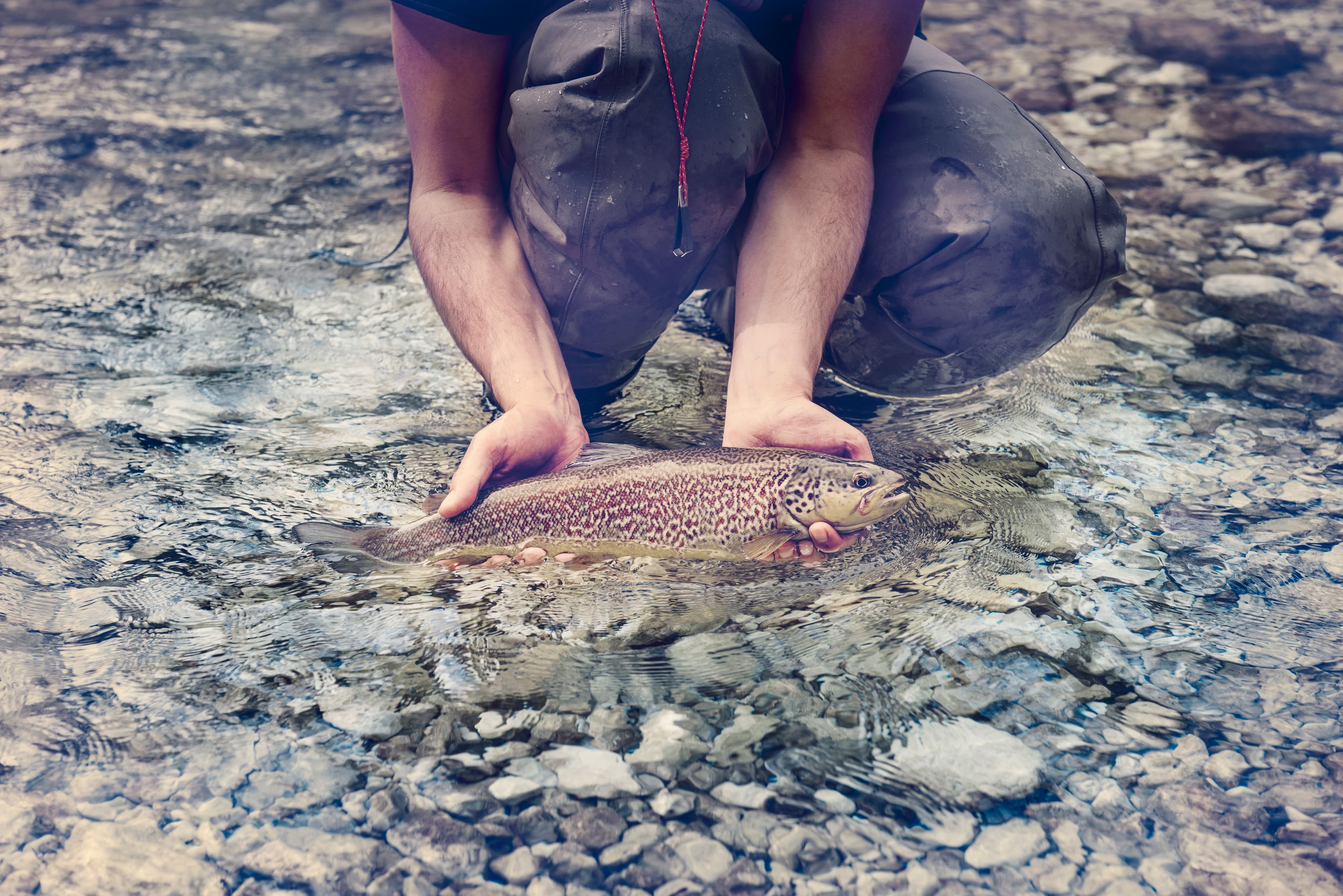
Benefits of Low Water Fishing
Fishing in low water isn’t all doom and gloom. There are real advantages that many anglers overlook when they see low levels and turn around.
Fish Are Concentrated
When a pond nearly dries up, fish have nowhere to go. The same principle applies to rivers and streams at low water — trout stack up in the remaining fishable sections because they simply can’t spread out. That concentration makes them easier to locate, even if they’re harder to fool. You spend less time searching and more time actually presenting a fly.
Easy Scouting
Low water is the best time to study what’s normally below the surface. Walk your favorite stretch and note depth changes, bottom composition transitions (mud to rock, small rocks to large rocks), and current breaks. Mark these spots mentally or on a map. When water levels return to normal, those subtle features will hold fish — and now you know exactly where they are.
Last Cast: How to Fish Low Water Situations
Low water conditions reward anglers who adapt and punish those who don’t. The techniques above — targeting oxygenated structure, downsizing your presentation, slowing way down, and committing multiple casts to each spot — give you a real edge when levels drop.
The best low-water mindset is simple: stay patient, keep an open mind, and remember that fish are still there. They’re just more concentrated and more cautious. That combination actually works in your favor if you approach it right.
And if you really want consistent success in tough conditions? Start with water that isn’t already pressured. Fish that haven’t been spooked by a dozen other anglers today are a lot more forgiving of a slightly imperfect presentation.
Low water rewards anglers who adapt — and who fish where the pressure isn’t. Infinite Outdoors connects you with private rivers, streams, and ponds across the West, with properties vetted by staff biologists for healthy fish populations. No leases. No crowds. No guesswork. Book your next fishing spot → infiniteoutdoorsusa.com
FAQ: Low Water Fishing
Q: What is the best bait for low water trout fishing?
A: Smaller presentations almost always outperform in low water. For fly fishing, size 18 and smaller dry flies or nymphs on a 9–12-foot leader are the standard call. Natural bait — small worms or salmon eggs where legal — can also be effective when fish are lethargic and reluctant to chase.
Q: How does low water affect trout behavior?
A: Low water raises water temperature, reduces dissolved oxygen, and eliminates cover. Trout become lethargic and move to deeper, cooler, more oxygenated spots — riffles, eddies, and the heads of pools. They also become significantly more spook-prone because they have less water depth to feel safe.
Q: Should I fish in the morning or evening during low water conditions?
A: Early morning and evening are best, especially in summer. Water temperatures are lowest after nighttime cooling, oxygen levels are slightly higher, and light conditions reduce fish visibility of your line and silhouette. Midday low-water fishing is tough — fish are thermal-stressed and largely inactive.
Q: What size leader should I use in low water?
A: Go longer and lighter than you think you need. A 9–12-foot leader tapering to 6X or 7X tippet is the move in most low-water trout situations. The additional length keeps your fly line farther from the fish, and the lighter tippet is nearly invisible in clear, shallow conditions.
Q: Can I fish private water during low water conditions?
A: Yes — and private water often fishes significantly better in low conditions than public stretches. Fish on private rivers and ponds haven’t been subjected to constant pressure, so they hold in more natural, predictable spots and are more willing to eat. Platforms like Infinite Outdoors offer on-demand private fishing access across the West.