How Layout Blinds Win Late-Season Waterfowl Hunts

Justin Hunold
12/26/2025
Welcome to the late season, where windburned mallards demand tighter concealment and smarter setups. With frozen wetlands, educated flocks, and high winds, one piece of gear consistently stands out: the layout blind.
I’ve spent enough late Decembers hunched in the snow to know one thing for sure—ducks don’t play fair when the mercury drops. They’ve seen it all: every overused A-frame, every lazy hide, every decoy spread that looks too perfect. When that happens, going lower isn’t just better—it’s mandatory.
Why Layout Blinds Shine in the Late Season
Layout blinds outperform traditional A-frames when the pressure is high and cover is scarce. They're minimalist, mobile, and lethal in the right setup. As ducks wise up and avoid obvious silhouettes, laying prone—back flat, eyes up—can be the difference between seeing ducks circle and seeing them commit.
Picture this: a wind-swept cornfield dusted in snow. Two layout blinds brushed so well into the stubble that they vanish at 10 yards. My buddy and I are shoulder to shoulder, hands tucked under insulated shells. We watch greenheads make a long pass. Then a second. Then they backpedal hard into the pocket we carved out between decoys. That doesn’t happen by luck. It’s concealment and placement dialed in.
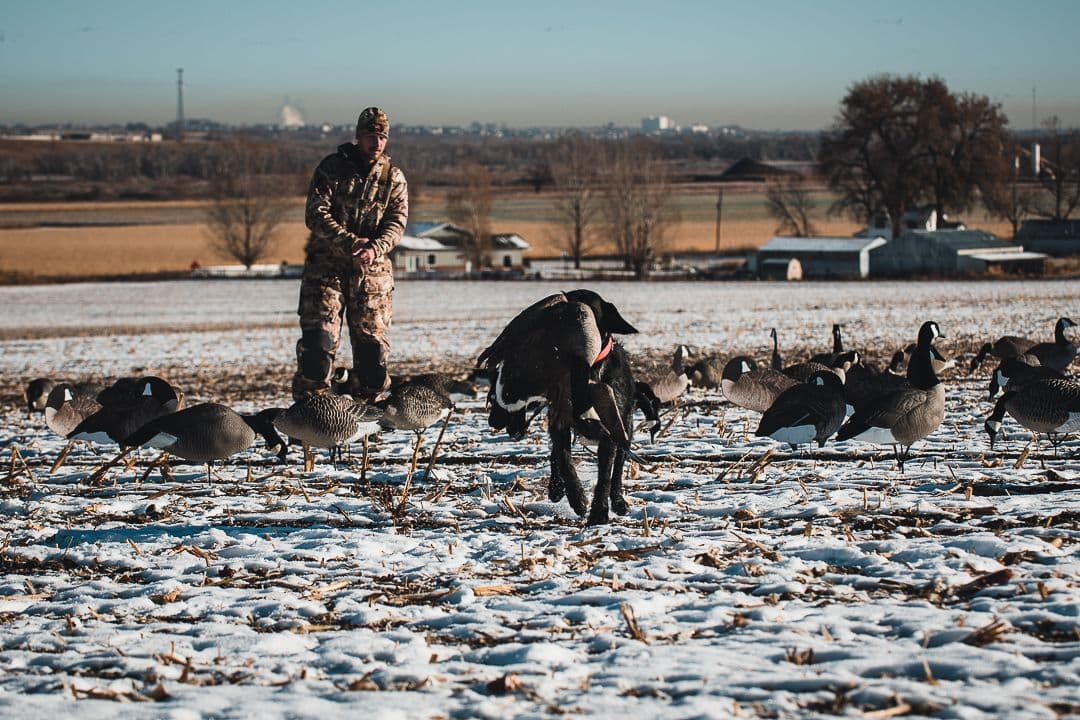
Set up in corn stubble, frozen hayfields, or pastureland edges, layout blinds let you position where the ducks want to land—not 40 yards away because your hide dictated the spread. And when cattails are crusted in ice and frost has chewed through the best willows, hugging the ground might be your only concealment.
Pro Tip: Brush in your blind with whatever’s local and dirty. Corn husks, grass mats, frozen dirt clods—it’s all fair game. Over-brushing beats under-concealing every single time. And never underestimate the value of a mud-covered blind. Clean is shiny. Shiny gets flared.
Must-Have Gear for Late-Season Layout Hunts
- Low-Profile Layout Blind: Choose one with a low front profile, waterproof base, and enough room to sit up fast without hang-ups.
- Realistic Duck Decoys: Look for highly detailed decoys with natural posture and color contrast for pressured birds.
- High-Visibility Goose Decoys: Full-body goose decoys help pull ducks from a distance, especially in wind.
- Insulated Waterfowl Jacket: You want bulk-free warmth. Opt for something windproof and breathable.
- Stubble Straps or Panels: Zip-tied bundles of field-matching grass or grain stubble can turn a bland blind into invisible cover.
The Kill Pocket: Building Spreads That Work With Your Layout Blind
Ducks burn calories fast in the cold. That means they fly with purpose and only commit when the spread looks safe. Your decoy setup isn’t just an invite—it’s a visual guide.
One high-performing layout blind tactic is the Runway Pocket Spread. Here’s how it works:
- Use goose decoys upwind to boost long-range visibility
- Fan your duck decoys out into a U or funnel shape
- Leave a 20-yard pocket open in front of the blinds
- Tuck your layout blinds just upwind of that kill hole
This setup acts like a visual runway. Birds key in, line up, and coast into the pocket with feet down.

Pro Tip: Place motion decoys like a spinning wing or agitator at the edge of the kill pocket—not dead center. That keeps birds from flaring and helps them key in on the landing zone.
Frozen Water? Layout Blinds Unlock Ice-Line Opportunities
Late in the season, shallow wetlands freeze over and ducks start keying on overlooked micro-openings—creek mouths, spring seeps, even ditch drains with a trickle of water left. These spots are gold, but they’re also tight. Not the kind of places you can drag a big blind into. That’s where layout blinds shine.
I had a solo hunt last January on the edge of a CRP patch where a drainage ditch cut through the corner. A cattle tank overflow kept a 20-yard patch of water open. I slid my layout blind behind a wall of frozen weeds and tossed out six decoys. That’s it. First light brought a flock of mallards off the river, and they dropped in like it was a prairie pothole in October.
Ice-Line Spread Tips:
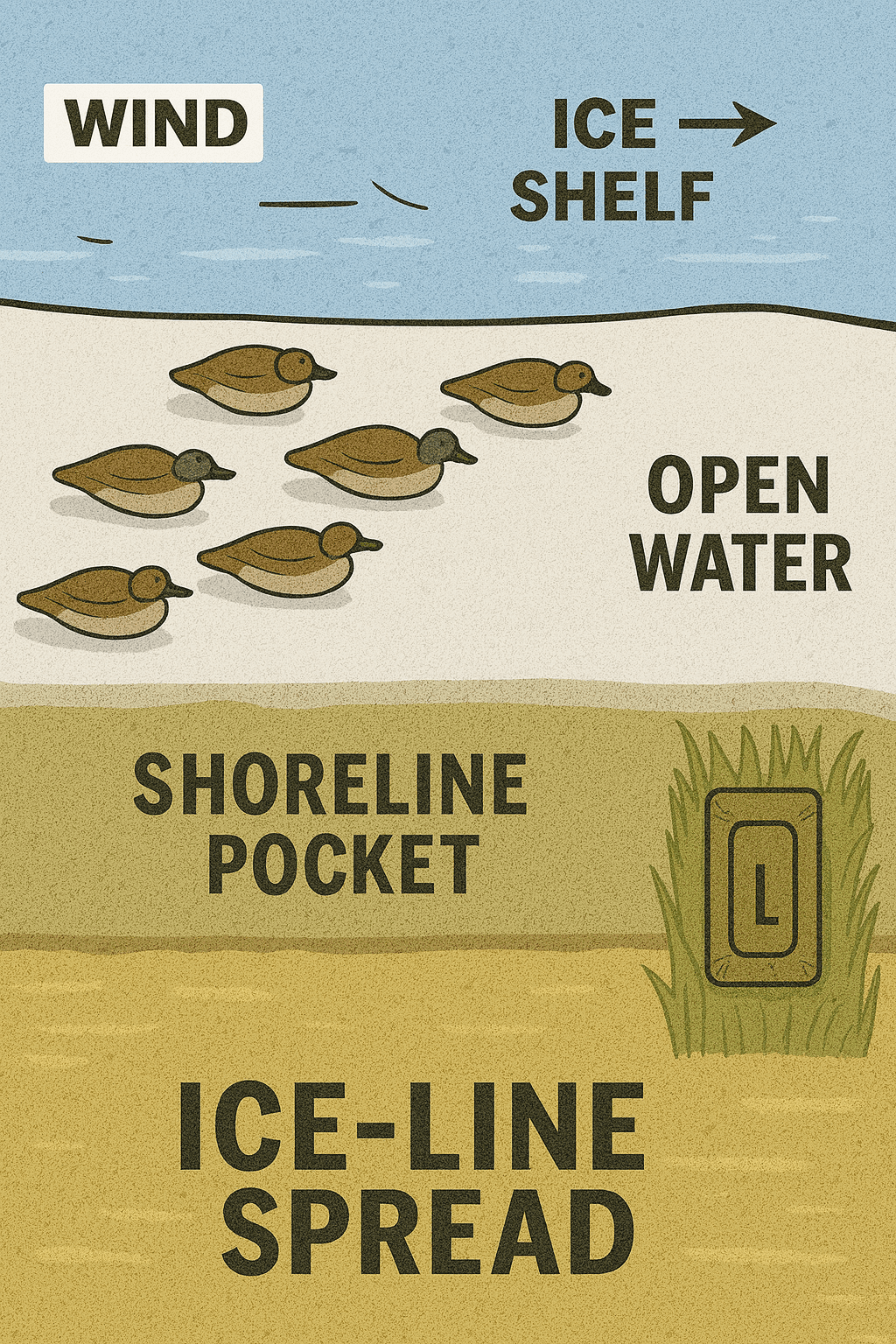
- Focus on where water meets ice—the birds naturally key in there
- Use fewer decoys, tight clusters mimic real ducks on limited water
- Stay low and brush in heavy; shoreline grass can be brittle but works if you layer
- Scout afternoon sun—those corners thaw first
Gear Tip: A sled-style blind offers insulation from frozen ground and easier transport across crusted snow or mud.
When to Switch to a Layout Blind
If it’s late season, your birds are stale, and the vegetation is burnt down to the roots, it’s time to ditch the A-frame. Layout blinds shine in wide-open spaces where ducks no longer tolerate tall shapes or human outlines. When birds flare off even the best brushed-in blind, dropping down and blending in is your next move.
The thinner the cover, the more important the profile. A well-brushed layout blind disappears into a cornfield better than any vertical blind ever will. Use that to your advantage.
Best Decoy Spreads for Layout Blinds
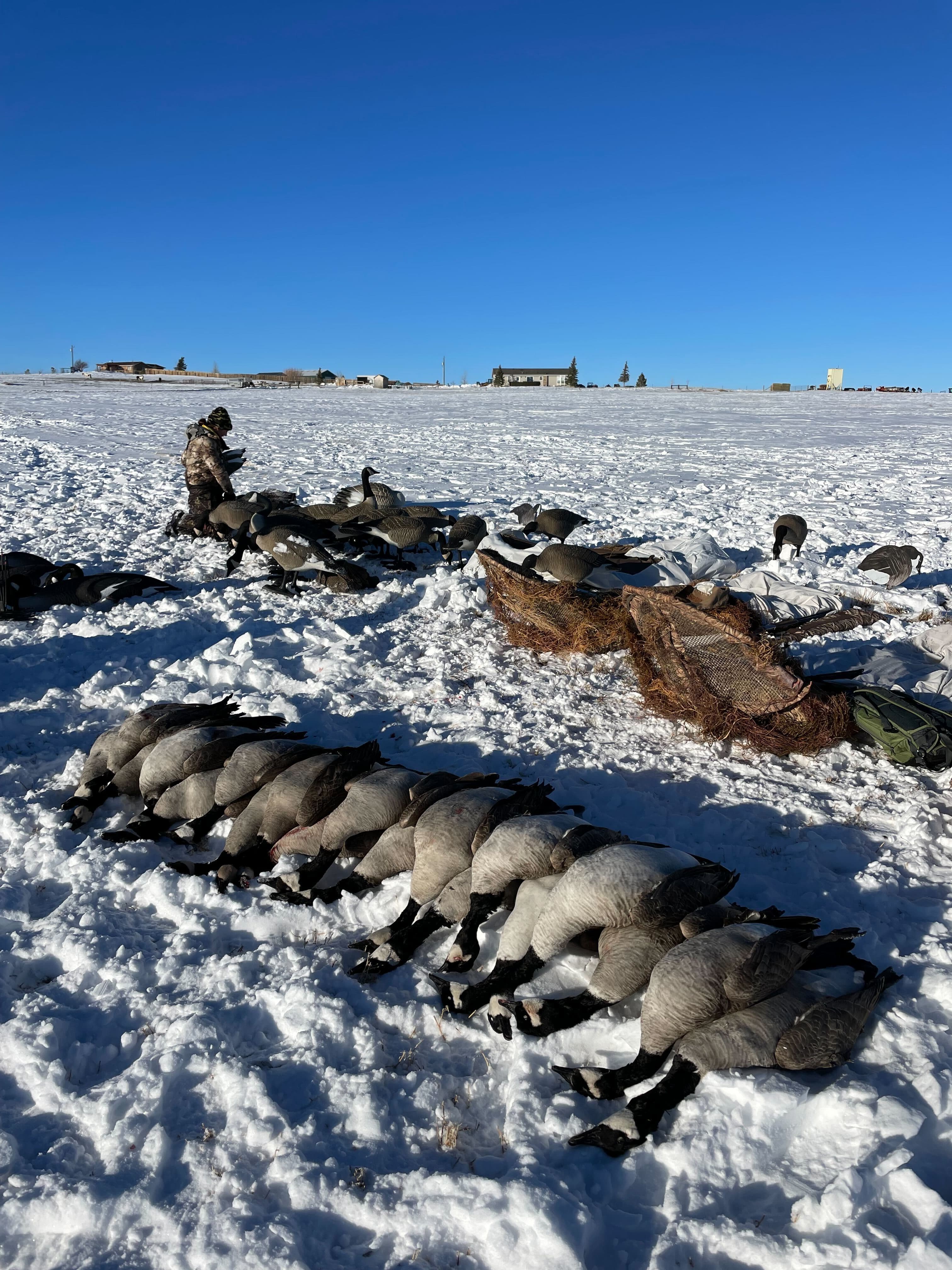
Not all spreads play nice with layout blinds. Because you’re laying prone, your shooting lanes are limited and your visibility isn’t as good as it is sitting on a stool in a traditional blind. That’s why U-shaped and runway-style spreads work so well. They guide birds in front of you—not over you.
Design your kill pocket to match wind direction. Keep goose decoys upwind, use motion to create realism, and don’t cluster too tight. Ducks want space to land, especially in late-season winds.
Can You Use Layout Blinds Near Frozen Water?
Absolutely. In fact, frozen water is where layout blinds shine brightest. Ice-line pockets, thawed creek mouths, and irrigation ditches are duck magnets when everything else locks up. You can slip a layout blind right into a patch of shoreline grass or snow-covered cattails and stay hidden.
Use floating decoys just off the ice shelf and keep your spread tight. These birds are looking for safety, not spectacle.
Concealment Tips for Layout Blinds
Concealment is everything. You can have the best decoy spread in the world, but if you stick out, birds flare. Period.
Here’s how to stay hidden:
- Match your blind to your environment—grass in grass, dirt in dirt
- Break up the outline—lay stubble or weeds across the edges
- Muck it up—mud, snow, and frozen dirt all help dull shine
- Don’t move—stay still until it’s time to shoot
Over time, I’ve learned that it’s not always about the perfect brush job. It’s about doing more than the next guy. Ducks notice patterns. Break yours up.
Finding Private Land for Layout Blind Hunts
Public land has its place, but when the ducks are educated and you need fresh birds, private access changes everything. The Infinite Outdoors app connects hunters with private landowners offering day hunts, leases, and exclusive duck holes you can’t find anywhere else.
You can filter by habitat type, location, and timing to match your target species and strategy. It’s a tool that puts you where the birds are, not where the crowds go.