Field Judging Pronghorn: How to Score a Buck Before the Shot


Mateo Lorenzo
03/26/2026
To field judge a pronghorn, use the ear-to-horn comparison as your baseline: a buck's ear is roughly 6 inches long. Horn length above 14 inches, good mass at the base, and a prong that extends past the tip of the ear are the three marks of a trophy-quality buck.
When hunters think of hunting in the western US, they often think of chasing big mule deer or elk in the mountains. However the pronghorn antelope is an icon of the western plains known for its speed, unique horns, and the vast landscapes it calls home. Known for being the fastest land animal in North America, hunting pronghorn can be as unique of an experience as the animal itself.
After your first pronghorn hunt you quickly realize why people come back year after year to chase these critters. However finding the right “goat” can be tricky if you don’t know what you are looking for. That first buck can look huge but when compared to others may not be the one you are looking for. Being able to quickly and accurately field judge a buck has personally made the difference between average bucks I’ve harvested to my biggest most mature pronghorn to date. Knowing the right thing to look for and being able to act fast can turn a good day into a great one that you will remember forever.
Hunting pronghorn this fall? Infinite Outdoors has private ranch access across Wyoming, Colorado, and Utah — antelope country where you actually have time to glass and judge a buck without competing for the same road. Browse pronghorn properties →
Why Field Judging Pronghorn Is a Specific Skill
Pronghorn hunting has a built-in complication that elk and mule deer hunting mostly don't: speed. Antelope cover ground fast, they live in open country where they can spot you long before you spot them, and encounters are often short. You may have 30 seconds to look through your binocular, make a call on a buck, and decide whether to commit to a stalk — or not.
The hunters who regret their pronghorn shots — or their passes — are almost always the ones who didn't have a clear mental framework for what they were looking for before the encounter happened. Knowing what a 15-inch buck looks like in your binocular before you're in the field is the difference between confidence and guesswork when it counts.
The Four Measurements That Define a Pronghorn Score
Boone & Crockett and Pope & Young both score pronghorn on the same four measurements, taken on each horn: horn length, circumference at the base, circumference at the smallest point above the prong, and prong length. In the field, you're estimating all four of these visually — usually quickly, often at distance.
The good news: you don't need to calculate a precise B&C score in the field. You need a fast, reliable system to separate bucks worth pursuing from bucks worth passing. That system is built around three visual reference points.
The Three Field References Every Pronghorn Hunter Needs
Reference 1 — The Ear
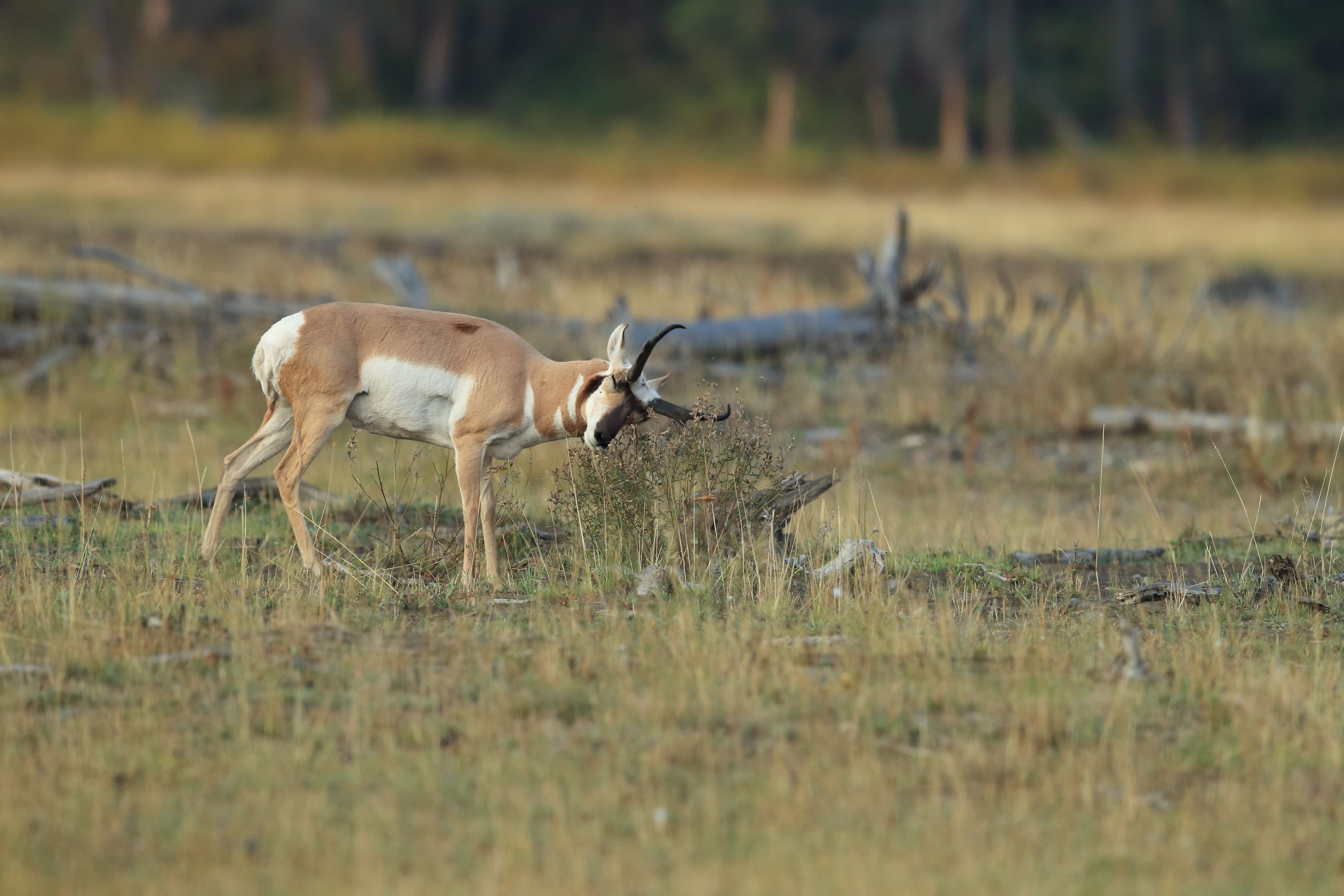
A pronghorn's ear, measured from base to tip, is approximately 5.5 to 6 inches long. This is your most reliable on-animal reference because it doesn't change with distance or angle the way body size does. Get comfortable burning this measurement into your brain before your hunt.
Use the ear to estimate horn length. A horn that reaches one ear-length above the top of the ear is approximately 12 inches — a marginal buck on most units. A horn that reaches one and a half ear-lengths above the ear is pushing 14-15 inches — a quality buck. Two ear-lengths above the ear is exceptional. Most states consider 14 inches a respectable trophy; 16+ inches is outstanding.
Quick Ear Reference
Pronghorn ear = ~6 inches. Horn tip at ear tip level = ~6 inches total (very young buck). Horn tip reaching 1 ear-length above the ear = ~12 inches. Horn tip reaching 1.5 ear-lengths above = ~14-15 inches. Horn tip reaching 2 ear-lengths above = 16+ inches. These are approximations — use them as a first filter, not a final measurement.
Reference 2 — The Eye to Horn Base
The distance from the center of a pronghorn's eye to the base of the horn is consistently around 4 to 4.5 inches. This gives you a secondary reference to calibrate horn mass and base circumference. A horn base that is clearly wider than this eye-to-base gap is showing above-average mass. A base that looks narrow relative to this distance suggests lighter mass and a lower overall score regardless of length.
Base circumference is often overlooked by new pronghorn hunters who focus on length, but it contributes meaningfully to the final score. A 15-inch buck with heavy, tight-curling horns will outscore a 16-inch buck with thin, widely set horns.
Reference 3 — The Prong
The prong — the forward-pointing tine that gives the pronghorn its name — is scored by its length measured from the front of the horn. A prong that extends forward past the tip of the ear is typically 4+ inches and represents solid scoring potential. Prongs that barely nub forward, or that angle outward rather than forward, add very little to the score.
Prong position matters as much as prong length. A prong set high on the horn, angled forward and slightly upward, is the most desirable configuration. A prong set low and pointing outward adds little length to the measurement and looks weaker in the field.
How to Put It Together: A Quick Field System
When you put a buck in your binocular, work through this sequence:
- Horn length first. Use the ear reference. Is he clearly above one ear-length? Above one and a half? This is your first pass/pursue decision point.
- Mass check. Are the bases heavy relative to the eye-to-base gap? Do the horns taper slowly or quickly? Thick, slow-tapering horns score better.
- Prong check. Does the prong extend past the ear tip? Does it angle forward (good) or outward (weaker)?
- Cut and curl. Look at where the horn tips end — do they curl back toward the face (the classic pronghorn "cut" at the tip), and how pronounced is the curl? Tight, pronounced curl adds character and often indicates a mature animal.
- Age estimate. Younger bucks have thinner, faster-tapering horns and shorter prongs. A mature 4-5 year old buck has heavy bases, a prominent prong, and horns with a full curl at the tip. Don't shoot a 2-year-old buck that looks impressive from 300 yards — he'll be twice the buck in two more years.
Common Field Judging Mistakes
Misjudging Length on Flat Ground
Pronghorn look bigger in your scope than they do in your binocular, and both can fool you. Flat, featureless terrain offers no reference points for scale. A lone buck in a flat basin can look enormous until a second buck walks into frame and you realize the first one is average. When possible, glass multiple bucks side by side before deciding. If you can only find one, use the ear reference obsessively.
Ignoring Mass for Length
A long, thin horn scores worse than a slightly shorter, heavy horn. New hunters consistently overvalue length and undervalue mass. When you're on the fence about a buck, pay extra attention to the base circumference. If the bases look thin — less than the eye-to-base gap — the buck may score lower than his length suggests.
Rushing the Shot on a Running Animal
A spooked pronghorn at full sprint looks big. Everything looks big when it's moving fast and you're on the trigger. If a buck runs before you've had time to judge him properly, let him go. Pronghorn are creatures of habit and often return to the same drainage within hours. A better look at a buck you can't properly judge is almost always available if you're patient.
The 15-Inch Standard
On most Western units, a buck with 14-15 inch horns, decent mass, and a visible prong represents a respectable, mature trophy. In high-quality units — particularly in Wyoming and parts of Montana — 16+ inch bucks are realistic targets. Know what your specific unit holds before you hunt. Draw odds are public information; trophy quality by unit is worth researching through state wildlife agency harvest reports before you show up.
Pronghorn hunting in the West is best on private land — no competing hunters in the same pasture, more time to glass and judge. Infinite Outdoors has private ranch access in Wyoming, Colorado, and Utah with pronghorn populations vetted by staff biologists. Browse antelope properties →
Glassing Strategy for Pronghorn Country
Field judging starts before you ever find a buck worth judging. In open antelope country, the standard approach is to find an elevated position — even a small rise works in flat terrain — and systematically glass the basin or flat from a fixed point. Glass slowly. Pronghorn blend into sage and grass better than you'd expect for an animal that relies primarily on eyesight.
Cover the terrain in overlapping horizontal strips with your binocular, pausing on any shape that doesn't quite fit the landscape. Pronghorn ears are distinctive when they're alert. A white rump patch catches light at odd angles. The curved black horn of a mature buck can look like a stick or a rock until it moves.
Once you've located animals, switch to a spotting scope for judging before committing to a stalk. A 20-60x spotting scope lets you work through the field judging sequence at a pace you can't achieve with a binocular. In pronghorn country, the spotting scope is as important as the rifle.
Conclusion: Know What You're Looking for Before You See It
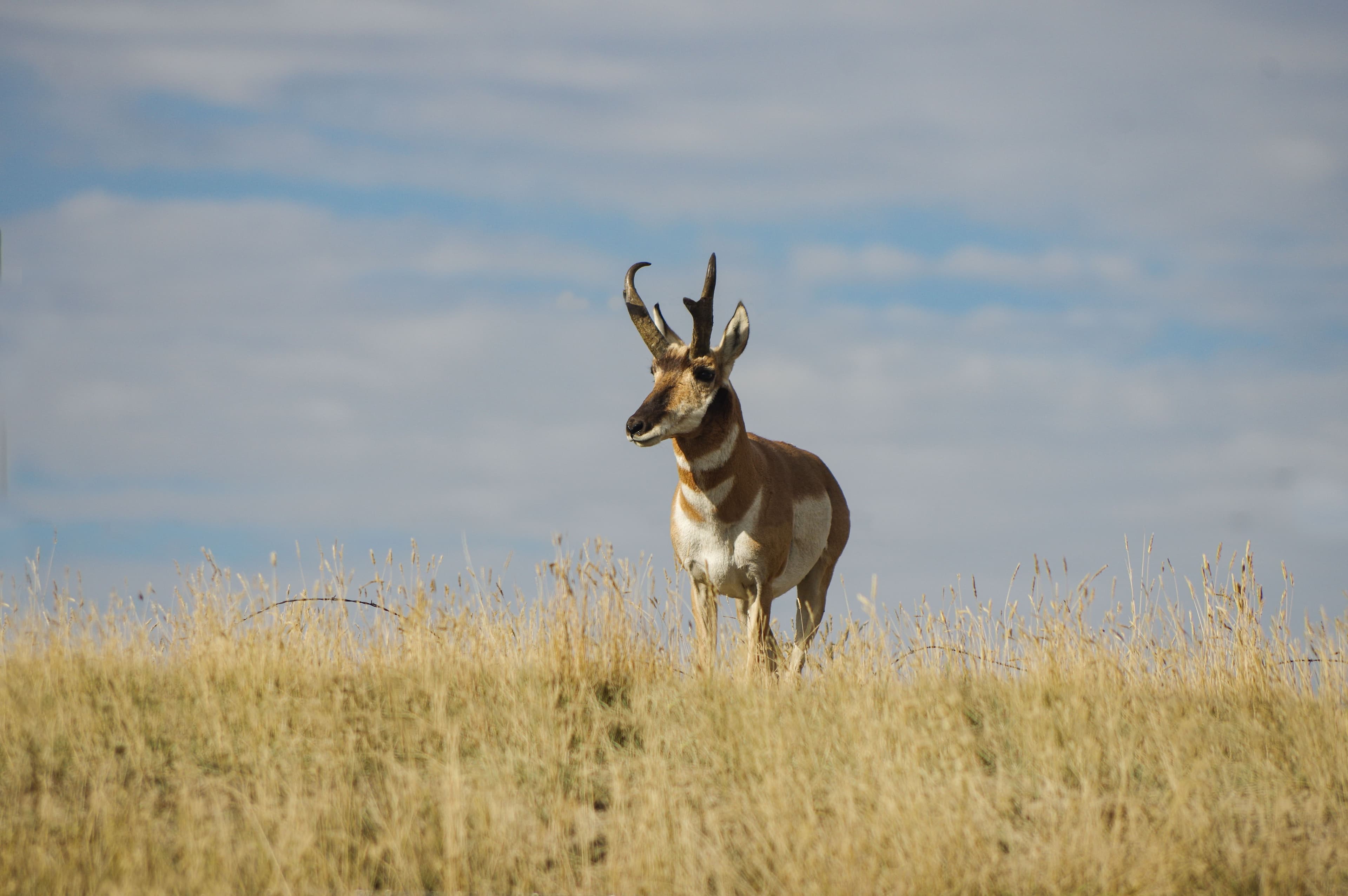
The hunters who consistently make good decisions on pronghorn are the ones who've done the mental preparation before they're in the field — who know what 14 inches looks like on an ear reference, what heavy mass looks like at the base, what a well-positioned prong looks like from 300 yards. The moment a buck steps into view in open antelope country is a bad time to figure any of that out.
Build the reference frame before the season. Glass every buck you find, even the ones you're not going to shoot. The young bucks and the does that make up most of what you'll see are practice reps for the moment the right buck walks into the basin. When he does, you'll know.
If you're hunting pronghorn in Wyoming, Colorado, or Utah this fall, private land access means fewer hunters competing for the same bucks — and more time to glass and make the right call. Infinite Outdoors has vetted private properties in prime antelope country. Browse pronghorn access and start planning your hunt at infiniteoutdoorsusa.com
FAQ: Field Judging Pronghorn
How long are pronghorn ears?
A pronghorn's ear measures approximately 5.5 to 6 inches from base to tip. This is the most reliable reference for estimating horn length in the field. A horn that reaches one full ear-length above the ear tip is approximately 12 inches; one and a half ear-lengths is approximately 14-15 inches.
What is considered a trophy pronghorn buck?
In most Western units, a buck with 14-15 inch horns, heavy bases, and a visible prong is considered a solid trophy. Bucks scoring above 80 inches B&C (combined score of all four measurements on both horns) are generally regarded as exceptional. In quality units in Wyoming and Montana, 16+ inch bucks are achievable. The definition of trophy varies by unit — research your specific draw unit's harvest data before your hunt.
How can you tell a mature pronghorn buck from a young one?
A mature buck (4-5 years old) has heavy horn bases, a prominent forward-angling prong, and pronounced curl at the horn tips. Young bucks have thinner, more uniform horns that taper quickly and have underdeveloped prongs. In the field, a young buck's horns look tall but skinny; a mature buck's horns look thick and solid through the binocular.
Does the prong length matter much to the B&C score?
Yes. Prong length is one of the four official measurements scored on each side. A prong extending 4+ inches forward contributes meaningfully to the total. More important than the measurement itself: prong position. A prong set high on the horn and angled forward scores better than a low, outward-facing prong of the same length.
What optics do I need for pronghorn hunting?
A quality 10x42 or 10x50 binocular for locating animals, and a 20-60x spotting scope for judging. In pronghorn country, shots regularly run 250-400 yards, and the spotting scope does the work that lets you make confident shot decisions at distance. Don't underinvest in glass for antelope hunting — it's the most important gear category after your rifle.