Elk Rut Tactics: How to Read the Bugle and Hunt the September Rut


Mateo Lorenzo
05/20/2026
Successful elk rut hunting starts with reading the bugle correctly. A screaming herd bull with cows is almost impossible to call in — he has everything he wants. A satellite bull cruising alone and answering aggressively may be your target. Match your calling to the situation, not what you want him to do.
Everyone dreams of hunting elk in the changing colors of the aspens, with bulls screaming and coming into every call you make. However those experiences tend to be a dime a dozen in reality. However with the right knowledge and practice, you can make those experiences happen more often than most. Learning how the elk are behaving, talking, and responding to not only your calls but other elk, gives you the level up on other hunters, and the elk you are chasing. In order to be more successful hunting during the rut, you have to lean more than how to call and hunt, but also read what the elk are saying and what they want to hear.
Browse elk hunting access at infiniteoutdoorsusa.com
Why the Rut Changes Everything
For eleven months of the year, a mature bull elk is one of the most reclusive animals in the Rocky Mountains. He sleeps in timber, feeds at night, and rarely gives you a reason to know he's there. Then September arrives, and the same animal is bugling from open ridgelines at first light, thrashing brush in the middle of the afternoon, and answering calls from a hunter a quarter mile away.
The elk rut — triggered by decreasing daylight in late August and peaking through September into early October — produces the most reliable window in the calendar to kill a mature bull. But the window is only reliable if you understand what's actually driving the behavior. A lot of hunters hear a bugle and react to the sound. The hunters who consistently kill bulls react to what the bugle is communicating.
Try Access+ for 7 days: private-land hunting and fishing across the US. Start the trial →
Reading the Bugle: What Bulls Are Telling You
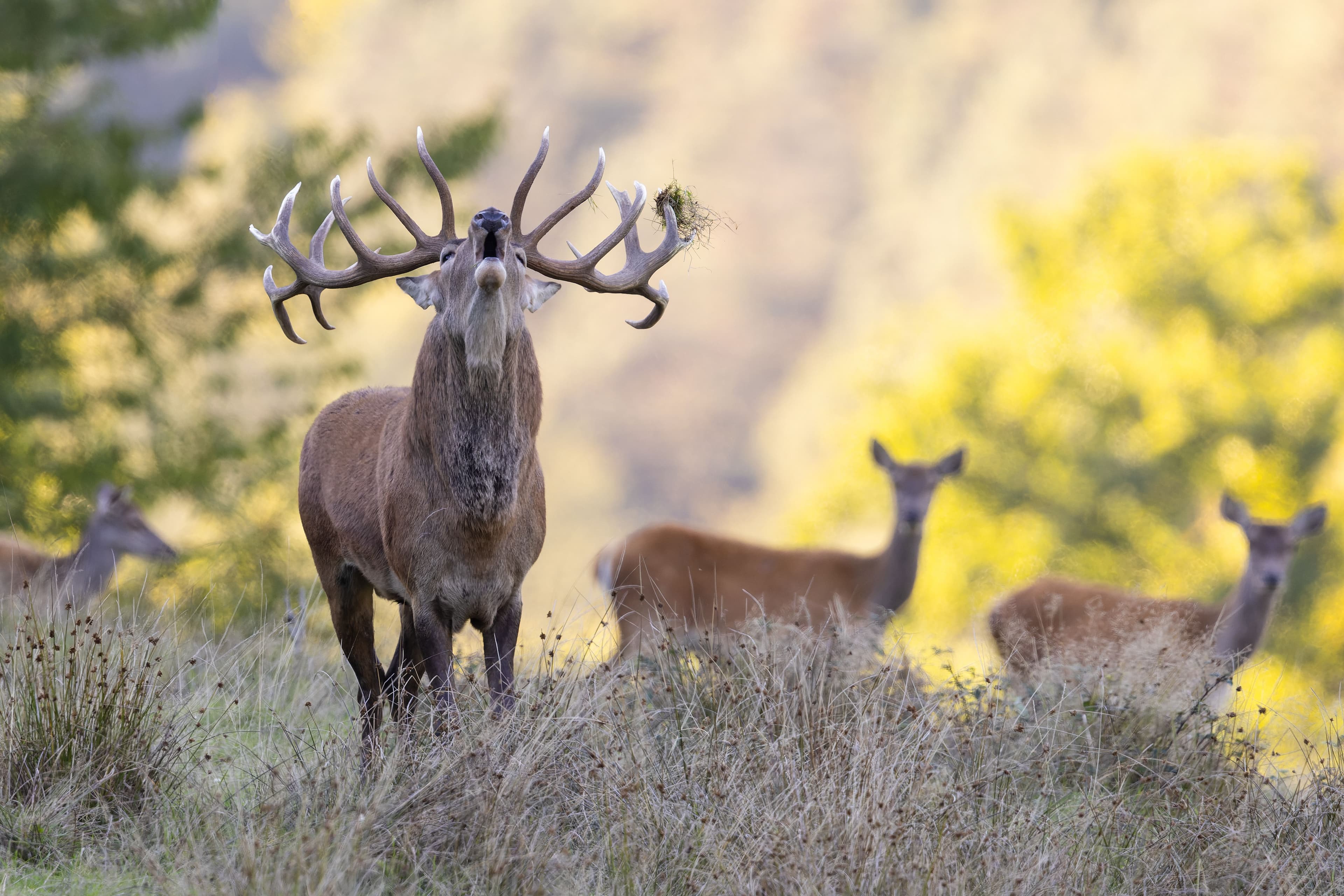
A bugle is not a single message. Elk use vocalization to establish dominance, locate cows, challenge rivals, and respond to perceived threats. Learning to distinguish between these situations is the most important skill in elk hunting during the rut.
The Herd Bull
A herd bull with cows in his possession bugles to assert dominance and keep his cows from straying. He's not looking for a fight — he's managing what he has. These bulls are notoriously difficult to call in because they have no motivation to move toward a sound. If you run an aggressive bugle at a herd bull, the most common result is that he herds his cows away from you, not toward you.
The correct approach to a herd bull is to work around him and target the cows, not the bull directly. Move to cut off where he's pushing his cows. If you can get between the bull and his cows, he'll often close the distance to retrieve them. This takes patience and terrain reading, but it's more reliable than bugling wars with a bull that won't leave his herd.
The Satellite Bull
This is the bull that is often easy to call in. A satellite bull is a mature animal with no cows, cruising the edges of other bulls' territory looking for an opportunity. He's frustrated, aggressive, and responsive. When a satellite bull answers your call with immediate, escalating vocalizations and starts closing the distance, you're in the game.
Satellite bulls respond well to challenging bugles because they're already in a competitive mindset. They're also more likely to respond to cow calls alone — if they hear a cow without a bull attached to it, they'll often come straight in without the back-and-forth calling sequence.
The Stress Bugle
Bulls that feel pressured — by predators, by other hunters, by repeated calling — often produce a shorter, more clipped bugle with less of the full chuckle or grunt sequence at the end. This is a warning sign. If a bull's vocalizations are becoming shorter and less enthusiastic, he's shutting down. Back off entirely. Come back to the area the next morning from a different direction.
The Chuckle at the End
Experienced elk callers pay close attention to the grunt-chuckle sequence that follows a bugle. A full chuckle — a series of guttural grunts after the main bugle — indicates a highly agitated bull looking to see another elk or bring you in. No chuckle, or a truncated chuckle, could mean the bull is less committed. Matching the intensity of your call to the bull's chuckle sequence is a key detail that separates consistent callers from lucky ones.
Browse elk hunting access at infiniteoutdoorsusa.com
When to Call and When to Go Silent
Overcalling is the single most common mistake elk hunters make. A bugle carries a long way in mountain terrain — sometimes over a mile. Every bull, every cow, and every other hunter in the drainage can hear you. Call only when you have a specific reason to.
Call More When:
- A satellite bull has answered and is closing distance — match his energy to keep him committed
- You're trying to locate bulls at first light before moving — use single locator bugles with long pauses between
- A bull has stalled at 150+ yards and won't commit — a cow call or estrus whine can break the stall
- You've just spooked a bull and he's walking away — a submissive cow mew can sometimes stop him
Stop Calling When:
- A bull is closing fast and you know where he is — he's already committed, your next job is to get ready to shoot
- A bull has gone quiet after repeated calling — he's hung up or shutting down
- You've been in the same spot more than two days — bulls in the area have patterned your calling location
- Wind is swirling — any call is wasted if you can't control your scent
Closing the Distance: The Setup Is Everything
Most failed elk encounters happen not because of bad calling but because of bad setups. A bull coming to a call needs a clear, obstacle-free approach to within shooting range — and you need to be in position before the encounter starts, not scrambling to get there after he's already committed.
The Shooter-Caller Split
In a two-person setup, the caller should be positioned 50-75 yards behind the shooter. When a bull responds and approaches, his eyes will go to the sound source — the caller. The shooter, positioned between the caller and the bull's likely approach route, gets a broadside or quartering shot while the bull's attention is focused elsewhere. This is the most reliable close-range elk setup and the reason two-person elk hunting produces significantly better results than solo hunting.
Terrain and Cover
Position yourself with shootable lanes in mind. A bugling bull in the timber sounds incredible and often goes nowhere because the trees are so thick you can't get a shot. If a bull is bugling from dense timber, try to work around to an opening — a park, a meadow edge, a burned section — where he's likely to emerge. A bull that won't leave the timber to come to a call in the open is often reachable if you push into the timber and get close. Also consider a “stop and scan” location. Elk tend to find a safe space to look for other elk or predators; place yourself in an area that requires them to move into an area where they can see and you can shoot. Often bulls will hold up on the edge of a meadow or top of a ridge first, and if they don’t see what they are looking for they may turn around. Get yourself close to that stop and scan point and you will increase your success.
Wind First, Always
Elk have excellent noses. A bull that winds you will leave the country — not just the meadow. Every setup decision starts with wind direction. In steep mountain terrain, thermals complicate this: morning thermals carry scent uphill as the sun heats the slope; evening thermals pull scent down as the air cools. Move in before light when thermals haven't established, or work side-hill so your scent is carrying across the slope rather than straight into a bull's nose.
The Phases of the Rut: Timing Your Hunt
The September elk rut isn't a single event — it moves through phases, and knowing which phase you're in determines which tactics to use.
Pre-Rut: Late August to Early September
Bulls are transitioning from velvet to hard antler, beginning to interact aggressively but not yet fully committed to breeding. Bugles are sporadic and more exploratory. Locator calls work well. Cows and calves are still in summer patterns. This phase rewards hunters willing to cover a lot of country to locate bulls before the main rut pushes them into more predictable behavior.
Peak Rut: Mid-September to Late September
This is the window. Herd bulls are actively tending cows, satellite bulls are cruising, and all animals are vocal and active. The best calling action typically happens in the first and last two hours of daylight, but rutting bulls can be encountered at any hour. If you have limited days in the field, target mid-September to late September for most Rocky Mountain elk populations — Colorado, Wyoming, Montana, Idaho, and New Mexico.
Post-Rut: October
Breeding activity slows as most cows have been bred. Bulls are exhausted, often reclusive, and much quieter. Bugling becomes rare. Effective tactics shift toward spot-and-stalk on feeding areas and glassing open parks at last light as bulls try to rebuild body weight before winter. Calling can still work but requires more patience and less aggression.
Elevation and Timing
In Colorado and Wyoming, early September elk hunting often finds bulls still at high elevation — above 10,000 feet in alpine basins and on cirque edges. As September progresses and temperatures cool, elk migrate down to 8,000-9,500 feet where the timber and parks intersect. Targeting the right elevation band for the date is as important as reading the rut phase.
Conclusion: Hunt What You Hear
The hunters who produce consistently during the elk rut aren't better callers — they're better listeners. They read what the bull is doing before they reach for a call. They understand that a herd bull bugling 400 yards away is a different problem than a satellite bull answering at 200. They match their approach to the animal's current state, not to a textbook sequence.
September elk hunting is one of the most intense hunting experiences in North America. It's also one of the most humbling, because the margin between a successful encounter and a blown stalk is razor thin. But when it comes together — when a bull commits to your call, steps into your lane, and you make the shot — there's nothing else like it.
Elk season comes once a year. If you're hunting private land in Colorado or Wyoming, Infinite Outdoors has biologist-certified elk properties with lower pressure and healthier populations. Browse elk hunting access at infiniteoutdoorsusa.com
FAQ: Elk Rut Tactics
When is the peak elk rut in Colorado?
Colorado elk typically peak between September 10 and September 25, varying by elevation and year. Rut is determined by cows going into estrus, which is triggered by the length of day, keeping it consistently in that window each year. The 2025 season saw peak rut activity around September 12-20 in most units — conditions and weather patterns shift the window by several days each year.
Should I use a bugle or cow call for elk?
Both have their place. Cow calls — particularly estrus whines and cow mews — work throughout the rut and are less likely to intimidate satellite bulls into hanging up. Bugles work best to locate bulls and to challenge satellite bulls that are already aggressive. Many successful hunters start with cow calls and escalate to bugles only if a bull is responding but stalling.
Why won't the bull come all the way in?
The most common reasons a bull hangs up: he's a herd bull with cows and has no reason to close distance; the wind shifted and he caught your scent; you overcalled and he's now suspicious; or there's a physical obstacle (dense timber, fence, creek) between you. Switching to a cow call or going completely silent for 5-10 minutes often breaks a hung-up bull.
How do you find elk during the rut?
In the hour before and after sunrise, locate bulls by listening for bugles from elevated positions with good sound travel. During midday, focus on wallows — bulls wallow frequently during the rut to cool down and coat themselves in scent. In the evening, glass open parks and meadow edges as elk move from bedding timber to feeding areas.
Does weather affect elk rut activity?
Yes, significantly. A cold front pushing through in mid-September will often trigger intense rut activity as temperatures drop. Heat suppresses midday movement but can produce exceptional early-morning and evening encounters. Snow events during the rut push elk to lower elevations and concentrate them, creating high-quality hunting windows if you can adjust your location quickly.Successful elk rut hunting starts with reading the bugle correctly. A screaming herd bull with cows is almost impossible to call in — he has everything he wants. A satellite bull cruising alone and answering aggressively may be your target. Match your calling to the situation, not what you want him to do.
Everyone dreams of hunting elk in the changing colors of the aspens, with bulls screaming and coming into every call you make. However those experiences tend to be a dime a dozen in reality. However with the right knowledge and practice, you can make those experiences happen more often than most. Learning how the elk are behaving, talking, and responding to not only your calls but other elk, gives you the level up on other hunters, and the elk you are chasing. In order to be more successful hunting during the rut, you have to lean more than how to call and hunt, but also read what the elk are saying and what they want to hear.
Browse elk hunting access at infiniteoutdoorsusa.com
Why the Rut Changes Everything
For eleven months of the year, a mature bull elk is one of the most reclusive animals in the Rocky Mountains. He sleeps in timber, feeds at night, and rarely gives you a reason to know he's there. Then September arrives, and the same animal is bugling from open ridgelines at first light, thrashing brush in the middle of the afternoon, and answering calls from a hunter a quarter mile away.
The elk rut — triggered by decreasing daylight in late August and peaking through September into early October — produces the most reliable window in the calendar to kill a mature bull. But the window is only reliable if you understand what's actually driving the behavior. A lot of hunters hear a bugle and react to the sound. The hunters who consistently kill bulls react to what the bugle is communicating.
Reading the Bugle: What Bulls Are Telling You
A bugle is not a single message. Elk use vocalization to establish dominance, locate cows, challenge rivals, and respond to perceived threats. Learning to distinguish between these situations is the most important skill in elk hunting during the rut.
The Herd Bull
A herd bull with cows in his possession bugles to assert dominance and keep his cows from straying. He's not looking for a fight — he's managing what he has. These bulls are notoriously difficult to call in because they have no motivation to move toward a sound. If you run an aggressive bugle at a herd bull, the most common result is that he herds his cows away from you, not toward you.
The correct approach to a herd bull is to work around him and target the cows, not the bull directly. Move to cut off where he's pushing his cows. If you can get between the bull and his cows, he'll often close the distance to retrieve them. This takes patience and terrain reading, but it's more reliable than bugling wars with a bull that won't leave his herd.
The Satellite Bull
This is the bull that is often easy to call in. A satellite bull is a mature animal with no cows, cruising the edges of other bulls' territory looking for an opportunity. He's frustrated, aggressive, and responsive. When a satellite bull answers your call with immediate, escalating vocalizations and starts closing the distance, you're in the game.
Satellite bulls respond well to challenging bugles because they're already in a competitive mindset. They're also more likely to respond to cow calls alone — if they hear a cow without a bull attached to it, they'll often come straight in without the back-and-forth calling sequence.
The Stress Bugle
Bulls that feel pressured — by predators, by other hunters, by repeated calling — often produce a shorter, more clipped bugle with less of the full chuckle or grunt sequence at the end. This is a warning sign. If a bull's vocalizations are becoming shorter and less enthusiastic, he's shutting down. Back off entirely. Come back to the area the next morning from a different direction.
The Chuckle at the End
Experienced elk callers pay close attention to the grunt-chuckle sequence that follows a bugle. A full chuckle — a series of guttural grunts after the main bugle — indicates a highly agitated bull looking to see another elk or bring you in. No chuckle, or a truncated chuckle, could mean the bull is less committed. Matching the intensity of your call to the bull's chuckle sequence is a key detail that separates consistent callers from lucky ones.
Browse elk hunting access at infiniteoutdoorsusa.com
When to Call and When to Go Silent
Overcalling is the single most common mistake elk hunters make. A bugle carries a long way in mountain terrain — sometimes over a mile. Every bull, every cow, and every other hunter in the drainage can hear you. Call only when you have a specific reason to.
Call More When:
- A satellite bull has answered and is closing distance — match his energy to keep him committed
- You're trying to locate bulls at first light before moving — use single locator bugles with long pauses between
- A bull has stalled at 150+ yards and won't commit — a cow call or estrus whine can break the stall
- You've just spooked a bull and he's walking away — a submissive cow mew can sometimes stop him
Stop Calling When:
- A bull is closing fast and you know where he is — he's already committed, your next job is to get ready to shoot
- A bull has gone quiet after repeated calling — he's hung up or shutting down
- You've been in the same spot more than two days — bulls in the area have patterned your calling location
- Wind is swirling — any call is wasted if you can't control your scent
Closing the Distance: The Setup Is Everything
Most failed elk encounters happen not because of bad calling but because of bad setups. A bull coming to a call needs a clear, obstacle-free approach to within shooting range — and you need to be in position before the encounter starts, not scrambling to get there after he's already committed.
The Shooter-Caller Split
In a two-person setup, the caller should be positioned 50-75 yards behind the shooter. When a bull responds and approaches, his eyes will go to the sound source — the caller. The shooter, positioned between the caller and the bull's likely approach route, gets a broadside or quartering shot while the bull's attention is focused elsewhere. This is the most reliable close-range elk setup and the reason two-person elk hunting produces significantly better results than solo hunting.
Terrain and Cover
Position yourself with shootable lanes in mind. A bugling bull in the timber sounds incredible and often goes nowhere because the trees are so thick you can't get a shot. If a bull is bugling from dense timber, try to work around to an opening — a park, a meadow edge, a burned section — where he's likely to emerge. A bull that won't leave the timber to come to a call in the open is often reachable if you push into the timber and get close. Also consider a “stop and scan” location. Elk tend to find a safe space to look for other elk or predators; place yourself in an area that requires them to move into an area where they can see and you can shoot. Often bulls will hold up on the edge of a meadow or top of a ridge first, and if they don’t see what they are looking for they may turn around. Get yourself close to that stop and scan point and you will increase your success.
Wind First, Always
Elk have excellent noses. A bull that winds you will leave the country — not just the meadow. Every setup decision starts with wind direction. In steep mountain terrain, thermals complicate this: morning thermals carry scent uphill as the sun heats the slope; evening thermals pull scent down as the air cools. Move in before light when thermals haven't established, or work side-hill so your scent is carrying across the slope rather than straight into a bull's nose.
The Phases of the Rut: Timing Your Hunt
The September elk rut isn't a single event — it moves through phases, and knowing which phase you're in determines which tactics to use.
Pre-Rut: Late August to Early September
Bulls are transitioning from velvet to hard antler, beginning to interact aggressively but not yet fully committed to breeding. Bugles are sporadic and more exploratory. Locator calls work well. Cows and calves are still in summer patterns. This phase rewards hunters willing to cover a lot of country to locate bulls before the main rut pushes them into more predictable behavior.
Peak Rut: Mid-September to Late September
This is the window. Herd bulls are actively tending cows, satellite bulls are cruising, and all animals are vocal and active. The best calling action typically happens in the first and last two hours of daylight, but rutting bulls can be encountered at any hour. If you have limited days in the field, target mid-September to late September for most Rocky Mountain elk populations — Colorado, Wyoming, Montana, Idaho, and New Mexico.
Post-Rut: October
Breeding activity slows as most cows have been bred. Bulls are exhausted, often reclusive, and much quieter. Bugling becomes rare. Effective tactics shift toward spot-and-stalk on feeding areas and glassing open parks at last light as bulls try to rebuild body weight before winter. Calling can still work but requires more patience and less aggression.
Elevation and Timing
In Colorado and Wyoming, early September elk hunting often finds bulls still at high elevation — above 10,000 feet in alpine basins and on cirque edges. As September progresses and temperatures cool, elk migrate down to 8,000-9,500 feet where the timber and parks intersect. Targeting the right elevation band for the date is as important as reading the rut phase.
Conclusion: Hunt What You Hear
The hunters who produce consistently during the elk rut aren't better callers — they're better listeners. They read what the bull is doing before they reach for a call. They understand that a herd bull bugling 400 yards away is a different problem than a satellite bull answering at 200. They match their approach to the animal's current state, not to a textbook sequence.
September elk hunting is one of the most intense hunting experiences in North America. It's also one of the most humbling, because the margin between a successful encounter and a blown stalk is razor thin. But when it comes together — when a bull commits to your call, steps into your lane, and you make the shot — there's nothing else like it.
Elk season comes once a year. If you're hunting private land in Colorado or Wyoming, Infinite Outdoors has biologist-certified elk properties with lower pressure and healthier populations. Browse elk hunting access at infiniteoutdoorsusa.com
FAQ: Elk Rut Tactics
When is the peak elk rut in Colorado?
Colorado elk typically peak between September 10 and September 25, varying by elevation and year. Rut is determined by cows going into estrus, which is triggered by the length of day, keeping it consistently in that window each year. The 2025 season saw peak rut activity around September 12-20 in most units — conditions and weather patterns shift the window by several days each year.
Should I use a bugle or cow call for elk?
Both have their place. Cow calls — particularly estrus whines and cow mews — work throughout the rut and are less likely to intimidate satellite bulls into hanging up. Bugles work best to locate bulls and to challenge satellite bulls that are already aggressive. Many successful hunters start with cow calls and escalate to bugles only if a bull is responding but stalling.
Why won't the bull come all the way in?
The most common reasons a bull hangs up: he's a herd bull with cows and has no reason to close distance; the wind shifted and he caught your scent; you overcalled and he's now suspicious; or there's a physical obstacle (dense timber, fence, creek) between you. Switching to a cow call or going completely silent for 5-10 minutes often breaks a hung-up bull.
How do you find elk during the rut?
In the hour before and after sunrise, locate bulls by listening for bugles from elevated positions with good sound travel. During midday, focus on wallows — bulls wallow frequently during the rut to cool down and coat themselves in scent. In the evening, glass open parks and meadow edges as elk move from bedding timber to feeding areas.
Does weather affect elk rut activity?
Yes, significantly. A cold front pushing through in mid-September will often trigger intense rut activity as temperatures drop. Heat suppresses midday movement but can produce exceptional early-morning and evening encounters. Snow events during the rut push elk to lower elevations and concentrate them, creating high-quality hunting windows if you can adjust your location quickly.