6.5 Creedmoor vs .308 Winchester: Which Rifle Cartridge Is Better for Big Game Hunting?


Justin Hunold
06/26/2026
Walk into any hunting camp with a 6.5 Creedmoor and someone will eventually ask why you did not bring a .308 Winchester.
Walk in carrying a .308, and someone will explain that the 6.5 shoots flatter, kicks less, and wins matches at distances where most hunters cannot see an elk, much less hit one.
This argument has become one of the great campfire debates of modern rifle hunting. It ranks somewhere between controlled-round feed versus push feed and whether expensive binoculars are actually worth the money.
The truth is less dramatic than the debate.
Both cartridges work. Both have filled freezers, crossed mountain ranges, ridden in muddy trucks, and accounted for everything from whitetails to bull elk. Neither is magic, and neither can make up for poor shooting, bad judgment, or the unfortunate decision to fire at an animal standing farther away than your abilities allow.
Still, the cartridges are not identical.
The 6.5 Creedmoor vs .308 Winchester comparison matters because each cartridge offers a different balance of recoil, bullet weight, trajectory, wind drift, terminal performance, and rifle handling. Those differences may be small on paper, but they can become meaningful in the field.
A hunter sitting over a hardwood funnel in Pennsylvania has different needs than a hunter crawling across Wyoming sagebrush. A backcountry mule deer hunter may value mild recoil and wind resistance, while a black bear hunter in thick timber may prefer heavier bullets and a larger frontal diameter.
The better cartridge depends on the hunt, the rifle, the bullet, and the person pulling the trigger.
Let us sort through the details.
A Brief History of Two Very Different Rifle Cartridges
The .308 Winchester arrived in the early 1950s and quickly established itself as one of the most useful centerfire rifle cartridges ever made.
It offered performance similar to the .30-06 Springfield in a shorter action, with less powder and manageable recoil. Military adoption of the closely related 7.62 NATO cartridge helped cement the .308’s reputation, but hunters did not need much convincing.
The .308 Winchester was accurate, powerful, efficient, and widely available. It worked in bolt-action rifles, lever guns, semi-automatic platforms, and lightweight mountain rifles. Ammunition manufacturers loaded it with bullets ranging from light varmint options to heavy big game projectiles.
For decades, the .308 was the practical hunter’s cartridge.
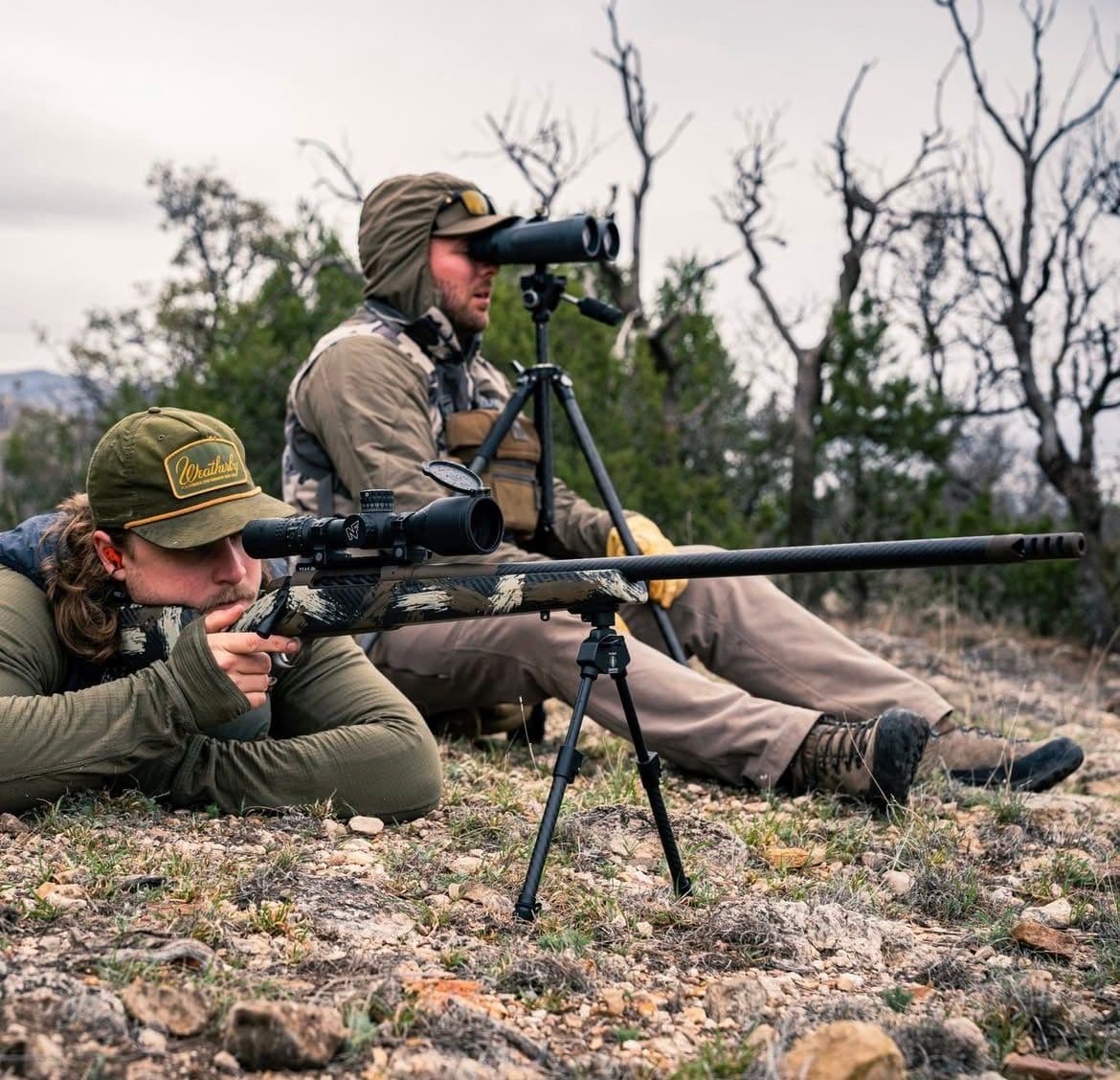
Then the 6.5 Creedmoor arrived in 2007.
It was designed around accuracy, efficient bullet seating, moderate recoil, and long, aerodynamic 6.5mm projectiles. Competitive shooters recognized its advantages quickly. Hunters followed once manufacturers began producing affordable rifles and expanding hunting ammunition.
The Creedmoor’s rise was helped by several factors. It was accurate in factory rifles, pleasant to shoot, and easy to load well. It also benefited from a new generation of rangefinders, ballistic apps, dialable scopes, and hunters who wanted to understand what their bullets were doing beyond 200 yards.
The cartridge became so popular that the backlash was nearly immediate.
Some hunters treated it as a miracle. Others treated it as a passing fad. Both sides exaggerated.
The 6.5 Creedmoor did not replace the .308 Winchester. It simply gave hunters another highly capable option.
6.5 Creedmoor vs .308 Winchester Ballistics
Ballistic comparisons can become misleading when people compare unmatched loads.
A lightweight 6.5mm bullet should not be compared to the heaviest .30-caliber load available and presented as proof that one cartridge is superior. Bullet construction, muzzle velocity, ballistic coefficient, rifle barrel length, and atmospheric conditions all matter.
A useful general comparison looks something like this:
- The 6.5 Creedmoor commonly fires 120- to 143-grain bullets.
- The .308 Winchester commonly fires 150- to 180-grain bullets.
- The 6.5 typically uses bullets with higher ballistic coefficients.
- The .308 launches heavier and wider bullets.
- The 6.5 usually produces less recoil.
- The .308 usually delivers more energy at close range.
- The Creedmoor generally retains velocity better at longer distances.
At ordinary hunting ranges, the differences are not enormous.
Inside 200 yards, either cartridge can be sighted to hit within a few inches of the aiming point with minimal adjustment. At those distances, trajectory arguments are mostly academic.
Beyond 300 yards, the 6.5 Creedmoor begins to show its advantage.
Its streamlined bullets tend to drop less and drift less in the wind than common .308 hunting loads. This does not mean the Creedmoor turns long-range shooting into an easy task. It means the cartridge is somewhat more forgiving when distance and wind increase.
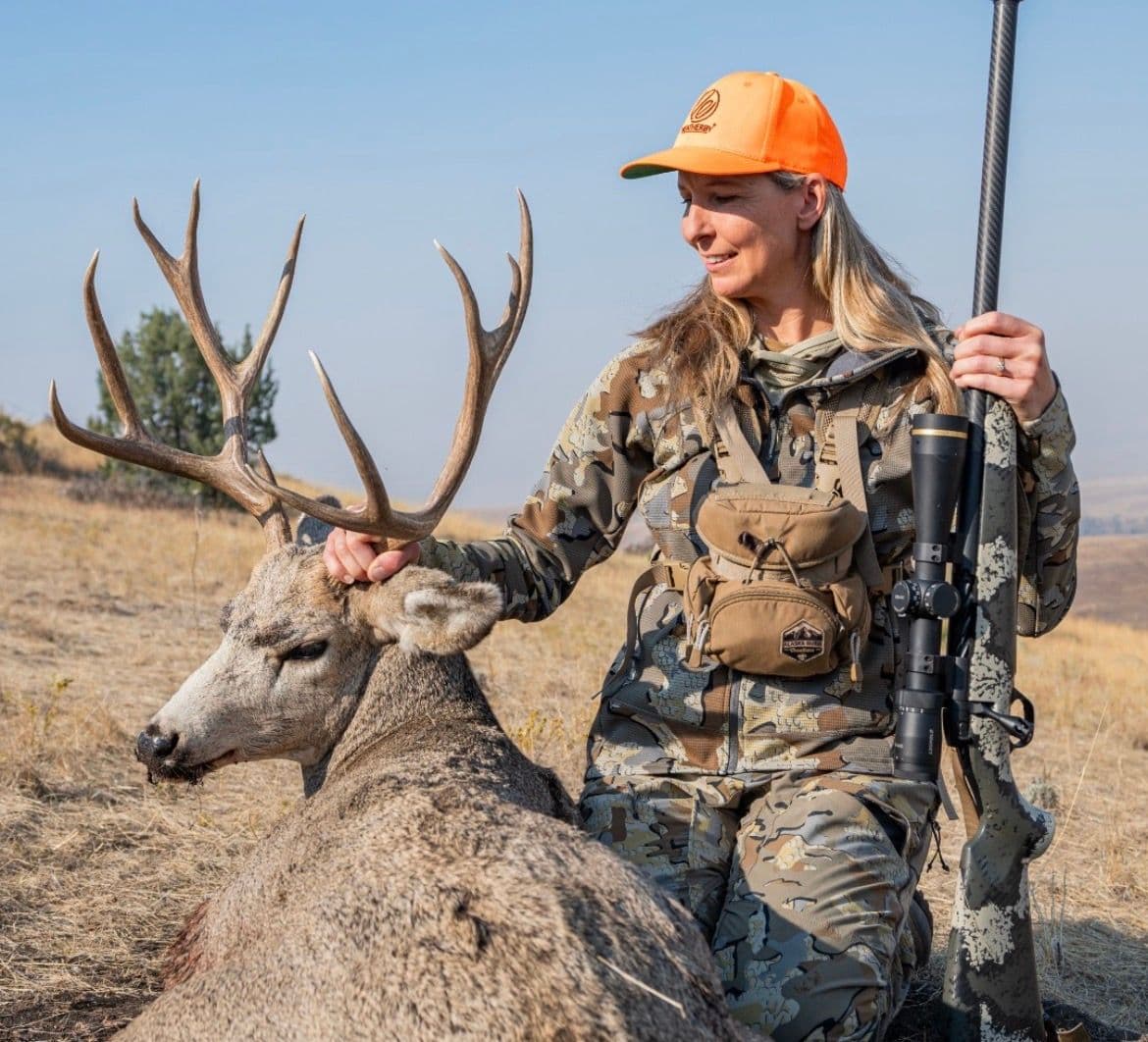
That distinction matters.
A slight ballistic advantage is useful. It is not permission to take reckless shots.
Hunters comparing these two rounds should also consider how they rank among the best Western hunting cartridges, particularly when deer, pronghorn, elk, and changing terrain may all be part of the same season.
Recoil and Shootability
Recoil may be the most important difference between these cartridges for the average hunter.
The 6.5 Creedmoor generally produces noticeably less recoil than the .308 Winchester when fired from rifles of similar weight. Exact recoil figures depend on the load, rifle weight, stock design, muzzle device, and shooter, but the Creedmoor is usually easier on the shoulder.
That matters for several reasons.
First, hunters tend to shoot lighter-recoiling rifles more accurately. They are less likely to tense up, close their eyes, jerk the trigger, or rush the shot.
Second, mild recoil makes practice more enjoyable. A cartridge that encourages someone to fire 40 thoughtful rounds from field positions may be more useful than a harder-kicking cartridge that encourages five rounds from a bench followed by a search for coffee.
Third, lower recoil helps smaller-framed hunters, new shooters, and anyone dealing with shoulder or neck problems.
The .308 is not a hard-kicking cartridge by traditional big game standards. It is far more comfortable than many magnums. In a properly stocked rifle with a decent recoil pad, most adult hunters can shoot it well.
But recoil is cumulative.
A lightweight .308 fired from an awkward prone position can be unpleasant. Add a heavy bullet and a stiff stock, and the rifle may begin to produce flinches long before the shooter recognizes them.
The Creedmoor’s softer recoil is a real advantage because accurate shooting matters more than theoretical power.
An animal does not care how much energy your cartridge produced at the muzzle. It cares where the bullet entered and what the bullet did after impact.
Hunters attracted to the Creedmoor’s mild recoil but wanting slightly more authority on elk should also review this 7mm-08 vs. 6.5 Creedmoor comparison.
Bullet Diameter, Weight, and Terminal Performance
The .308 Winchester fires a .308-inch bullet. The 6.5 Creedmoor fires a .264-inch bullet.
The .308’s larger diameter and heavier bullet options give it an advantage in raw frontal area and, with certain loads, momentum. That is useful for close-range hunting, larger animals, and situations where penetration through heavy muscle and bone may be required.
The 6.5 Creedmoor relies more heavily on sectional density, efficient bullet shape, and controlled expansion.
Sectional density describes the relationship between a bullet’s weight and diameter. Long, narrow bullets can penetrate very well because their weight is concentrated behind a smaller frontal area. This is one reason quality 6.5mm hunting bullets often perform better on large game than their modest diameter might suggest.
Bullet construction remains critical.

A rapidly expanding match-style bullet is not the same as a bonded hunting bullet, monolithic copper projectile, or controlled-expansion design. Hunters sometimes talk about cartridges as though every bullet loaded into them behaves identically.
They do not.
A well-built 140-grain 6.5mm bullet placed through the lungs of an elk can provide excellent penetration and a quick kill. A poorly chosen bullet placed badly can produce a long tracking job.
The same is true of the .308.
A 165- or 180-grain controlled-expansion bullet gives the .308 strong performance on large-bodied animals. Yet no increase in bullet weight can rescue a shot through paunch, heavy brush, or empty air.
The cartridge delivers the bullet. The bullet does the work.
6.5 Creedmoor vs .308 for Whitetail Deer
For whitetail hunting, both cartridges are more than adequate.
Most whitetails are shot inside 200 yards. Many are taken inside 100. At those distances, the trajectory difference between the 6.5 Creedmoor and .308 Winchester is minor.
The choice depends more on rifle fit, hunting style, and bullet selection.
When the 6.5 Creedmoor Makes Sense
The 6.5 Creedmoor is an excellent whitetail cartridge for open country, agricultural fields, powerline cuts, prairie river bottoms, and Western terrain where shots may stretch beyond typical woods ranges.
Its mild recoil makes it easy to shoot from tree stands, box blinds, tripods, and improvised field positions. It is also a strong choice for younger hunters who need a cartridge they can practice with comfortably.
With proper hunting bullets, the Creedmoor provides more than enough penetration for broadside and quartering shots on deer.
When the .308 Winchester Makes Sense
The .308 is ideal for hunters working in timber, brushy cover, and mixed terrain where shots are close and angles can change quickly.
Its heavier bullets perform well on large-bodied northern whitetails. The cartridge is also available in compact bolt guns, short semi-automatic rifles, and handy woods rifles.
A .308 loaded with a quality 150- or 165-grain bullet is about as practical as deer hunting equipment gets.
The .308 does not possess mystical brush-bucking ability. No hunting bullet can reliably plow through saplings without deflection. The advantage is simply that the cartridge offers heavier bullet choices and strong close-range performance.
For whitetails, this comparison is essentially a draw.
Choose the rifle you shoot best.
6.5 Creedmoor vs .308 for Mule Deer
Mule deer hunting often involves more open terrain, stronger winds, and longer shooting opportunities than whitetail hunting.
Here, the 6.5 Creedmoor begins to separate itself.
Its high-ballistic-coefficient bullets retain velocity and resist wind drift well. A hunter who has confirmed rifle data and practiced from realistic positions may find the Creedmoor easier to manage at 300 to 500 yards.
The .308 remains fully capable of taking mule deer at those distances, but it generally requires more elevation correction and wind adjustment.
This difference should not be overstated. A rangefinder and ballistic turret can compensate for bullet drop. Wind is the harder problem.
A cartridge that drifts a few inches less may increase the margin for error, but it cannot compensate for a bad wind call.
The .308 may still be preferable for hunters expecting close encounters in broken timber, steep canyons, or migration cover. A lightweight .308 with a 165-grain bullet is a proven mule deer combination.
For open-country mule deer, the 6.5 Creedmoor gets the edge.
For mixed terrain and shorter ranges, the .308 remains hard to fault.
The cartridge decision becomes clearer once hunters understand the differences between mule deer and whitetail hunting, especially the greater visibility, wind exposure, and longer shot opportunities common in mule deer country.
6.5 Creedmoor vs .308 for Elk
This is where the argument usually becomes loud.
Some hunters believe the 6.5 Creedmoor is perfectly suited for elk at almost any reasonable distance. Others believe using one on elk is evidence of poor character.
Neither position is especially useful.
The 6.5 Creedmoor can kill elk cleanly with proper bullets, disciplined shot placement, and sensible distance limits. It has enough penetration to reach vital organs from common broadside and slightly quartering angles.
What it does not provide is a large margin for error.
Elk are heavy animals with thick muscle and substantial bone. A marginal hit with any cartridge is a serious problem, but the Creedmoor gives the hunter less bullet weight and frontal area than the .308.
For an experienced hunter who shoots the 6.5 exceptionally well, uses a robust hunting bullet, and waits for a good angle, the cartridge is capable.
For a hunter choosing one rifle specifically for elk, the .308 Winchester is generally the safer recommendation.
A 165-, 168-, or 180-grain premium bullet gives the .308 an advantage in close-range energy and bullet mass. It is better suited for quartering shots and provides more authority when the bullet encounters heavy tissue or bone.
That does not make the .308 an elk hammer.
It is still a moderate cartridge. Shot placement and bullet construction remain essential. Hunters expecting to shoot across canyons or in severe winds may prefer a more powerful cartridge with greater velocity and energy.
Between these two, however, the .308 gets the nod for elk.
The Creedmoor can do the job.
The .308 gives the hunter more room to work with.
Once the rifle and cartridge are settled, this list of overlooked elk hunting gear can help prepare for the mountain conditions that often matter more than minor ballistic differences.
Black Bear, Pronghorn, and Feral Hogs
General big game hunting includes animals with very different builds and habits. The best cartridge for one may not be the best for another.
Black Bear
Black bears are not especially difficult to penetrate, but their heavy fur, fat, and rounded body shape can make blood trails hard to follow.
Both cartridges work well.
The .308’s heavier bullets and larger wound channel make it especially appealing in thick cover where tracking conditions may be poor. A controlled-expansion 165- or 180-grain bullet is a solid choice.
The 6.5 Creedmoor is fully capable with a suitable bullet, but hunters should avoid overly fragile projectiles and focus on broadside or slightly quartering shots.
Advantage: .308 Winchester.
Pronghorn
Pronghorn country often means open terrain, distance, and wind.
The 6.5 Creedmoor fits this hunt extremely well. Its flat trajectory, manageable recoil, and efficient bullets make it a natural choice for shooting from prone, sitting, or supported kneeling positions.
The .308 will certainly kill pronghorn, but its heavier bullets offer little practical advantage on such lightly built game.
Advantage: 6.5 Creedmoor.
Before worrying about a few inches of trajectory, hunters should learn how to field judge a pronghorn and make an accurate decision during the brief opportunities common on open ground.
Feral Hogs
Feral hogs vary tremendously in size, and shot opportunities may range from controlled broadside shots to fast follow-ups in heavy cover.
The .308’s heavier bullets and greater close-range impact make it a strong hog cartridge. It also performs well in compact semi-automatic rifles, which can be useful when hunting groups of hogs.
The 6.5 Creedmoor works, particularly for longer shots across fields and senderos, but bullet selection becomes important on large boars.
Advantage: .308 Winchester.
Ammunition Availability and Cost
The .308 Winchester has one of the largest ammunition selections of any rifle cartridge.
Hunters can find loads designed for deer, elk, hogs, target shooting, tactical use, and competition. Bullet weights and designs are abundant. Even small sporting goods stores often carry at least a few .308 hunting loads.
The 6.5 Creedmoor is also widely available, although selection can vary in rural areas.
Its popularity has encouraged nearly every major manufacturer to produce hunting and match ammunition. Premium bullet options are excellent, and factory accuracy is often very good.
The .308 still holds the advantage in overall variety.
It is also easier to find in unusual places. A hunter who arrives in camp without ammunition may have better luck finding .308 cartridges at a local hardware store than a specific 6.5 Creedmoor hunting load.
Cost fluctuates, but both cartridges are common enough to support reasonably priced practice ammunition.
Hunters should not choose a rifle based only on the cheapest ammunition they see online. The more important question is whether they can consistently obtain the exact hunting load their rifle prefers.
Once a rifle is sighted in with a particular load, changing ammunition can shift the point of impact. Sometimes the change is slight. Sometimes it is enough to miss an animal.
Buy enough ammunition to practice, confirm zero, and hunt without switching loads halfway through the season.
Rifle Weight and Barrel Length
Both cartridges fit short-action rifles, which helps manufacturers build compact hunting platforms.
The 6.5 Creedmoor often uses 22- to 24-inch barrels to take advantage of its powder capacity and velocity potential. Shorter barrels work, but they generally reduce velocity.
The .308 is efficient in shorter barrels and performs well from 18- to 22-inch hunting rifles. This makes it attractive for timber hunting, suppressor use, and compact mountain rifles.
A few inches of barrel may not sound important until the hunter adds a suppressor, climbs through deadfall, or tries to maneuver inside a ground blind.
The Creedmoor may have an advantage in lightweight rifles because its mild recoil keeps the gun manageable.
A very light .308 can become uncomfortable. There is nothing wrong with carrying a six-pound rifle, but the laws of physics still apply when the trigger breaks.
Hunters should balance carry weight against shootability.
A rifle carried for five miles and fired once should still be pleasant enough to shoot accurately. A heavy rifle may be steady, but it becomes less charming after several thousand feet of elevation gain.
The best hunting rifle is light enough to carry and heavy enough to shoot well.
Cartridge choice should also fit the entire hunt, and this fall big-game hunting gear list helps hunters plan around terrain, weather, access, distance from the vehicle, and the species being pursued.
Accuracy and Practical Field Shooting
The 6.5 Creedmoor has a reputation for exceptional accuracy, and that reputation is deserved.
Its case design, efficient bullets, moderate recoil, and widespread use in precision shooting have contributed to excellent factory rifles and ammunition.
The .308 Winchester is also inherently accurate. It has been used in competition, military marksmanship, law enforcement, and hunting for generations.
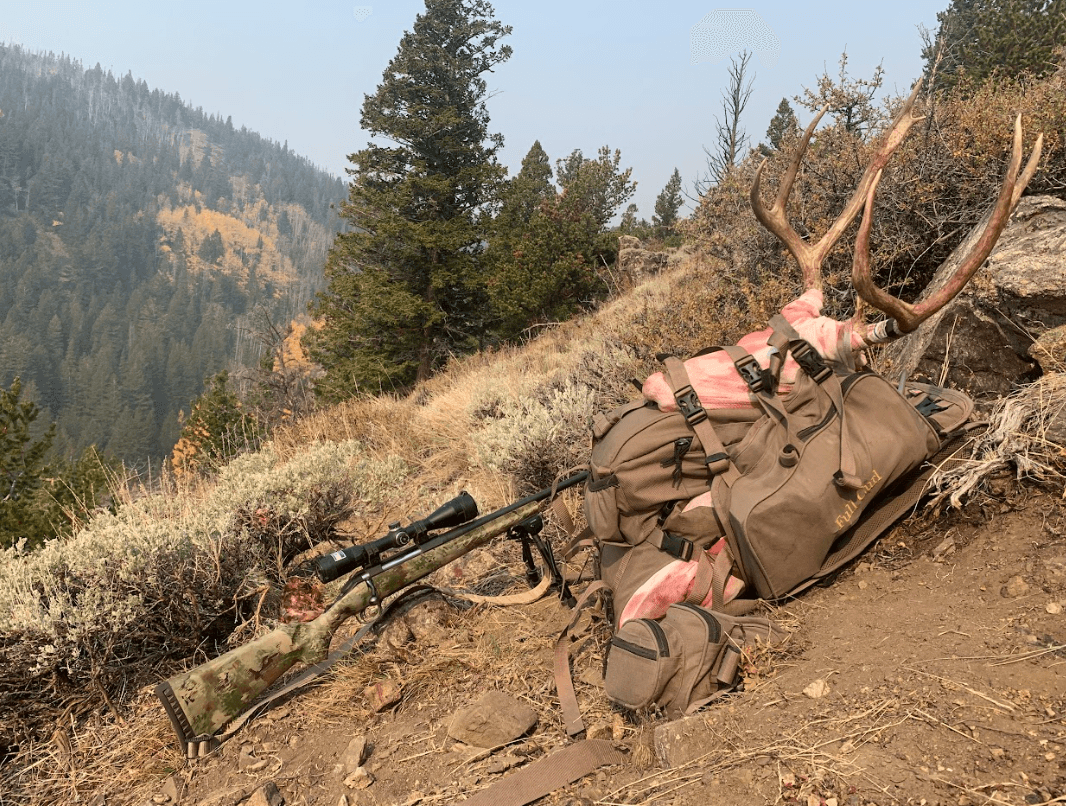
At normal hunting distances, the mechanical accuracy difference between two quality rifles may be irrelevant.
A rifle that groups one inch at 100 yards is fully capable of taking big game at reasonable ranges. The hunter’s ability to build a stable position, control breathing, manage the trigger, and read the wind will matter more than whether the rifle prints a slightly smaller benchrest group.
Practical accuracy is not measured from sandbags alone.
Hunters should practice from:
- Prone with a backpack or bipod
- Sitting with shooting sticks
- Kneeling against a tree or post
- Standing with tripod support
- Improvised rests
- Sloped and uneven ground
They should also practice with elevated heart rates, cold fingers, gloves, and limited setup time.
A hunter who can shoot a .308 confidently from field positions is better equipped than a hunter who owns an extremely accurate Creedmoor but only shoots from a bench.
The reverse is equally true.
Effective Range and Ethical Limits
Cartridges do not have a single fixed maximum hunting range.
Effective range depends on bullet construction, impact velocity, animal size, shot angle, wind, shooting position, and the hunter’s demonstrated skill.
A bullet may remain supersonic or carry a certain amount of energy beyond the distance where the hunter can reliably place it into the vital zone.
That distinction is often ignored.
For most hunters, the practical limit of either cartridge is not determined by the cartridge. It is determined by their ability to hit a target from a field position under hunting conditions.
The 6.5 Creedmoor carries velocity efficiently and often maintains suitable expansion speeds farther than conventional .308 loads. It also drifts less in the wind.
That gives it an advantage for hunters who possess the skill to use it.
The .308 begins with heavier bullets and more muzzle energy, but it sheds velocity more quickly. At extended distances, bullet drop and wind drift become more demanding.
Neither cartridge should be treated as a long-range shortcut.
Before hunting, a shooter should be able to place multiple first-round hits into a vital-sized target at the intended distance, from a realistic position, in variable conditions.
Hitting once after several corrections is not a hunting standard.
It is a warning.
Which Cartridge Is Better for New Hunters?
The 6.5 Creedmoor is usually the better choice for a new hunter.
Its mild recoil encourages practice and reduces the chance of developing a flinch. Ammunition is widely available, rifles are common, and the cartridge works well for deer, pronghorn, hogs, black bear, and carefully selected elk situations.
The .308 is the better choice for someone who wants broader bullet selection and expects to hunt larger game regularly.
A new hunter who will primarily pursue whitetails and pronghorn may be better served by the Creedmoor.
A hunter planning frequent elk, bear, and hog hunts may benefit from the .308.
Fit matters more than cartridge reputation.
A properly fitted rifle with a good trigger and useful scope will help a new hunter far more than an additional few hundred foot-pounds of energy.
The One-Rifle Hunter
Many hunters want one rifle that can handle nearly everything.
Between these two cartridges, the .308 Winchester is the stronger all-around choice.
It covers deer-sized game easily and offers heavier bullets for elk, black bear, and hogs. It works well in compact rifles and remains effective across most realistic hunting distances.
The 6.5 Creedmoor is the better specialized generalist, which sounds contradictory but is not.
It excels for deer-sized game, open country, recoil-sensitive shooters, and hunters who practice at longer distances. It can handle elk with careful bullet selection and good judgment, but it is not as forgiving as the .308.
The .308’s advantage is versatility.
The Creedmoor’s advantage is shootability.
The correct choice depends on which quality the hunter values more.
Final Verdict: 6.5 Creedmoor vs .308 Winchester
The 6.5 Creedmoor vs .308 Winchester argument does not have a universal winner.
For whitetail deer, either cartridge is excellent.
For mule deer and pronghorn in open country, the 6.5 Creedmoor offers less recoil, flatter trajectory, and reduced wind drift.
For elk, black bear, and large feral hogs, the .308 Winchester provides heavier bullets and better close-range authority.
For new hunters and recoil-sensitive shooters, the Creedmoor is easier to master. For the hunter who wants one rifle for multiple big game species, the .308 is the more versatile choice.
The decision should come down to honest answers.
What animals will you hunt most often?
What distances do you actually shoot?
How much recoil can you manage without flinching?
Which rifle fits you best?
Which cartridge can you afford to practice with?
The animal will never know whether the bullet came from a Creedmoor or a .308. It will know whether the hunter put that bullet in the right place. That remains the part of rifle hunting no cartridge debate can replace.
Once you have chosen the rifle you shoot best, the next step is learning how to get private-land hunting access for elk, mule deer, pronghorn, whitetail, and other big-game opportunities.